
 Pediatrics
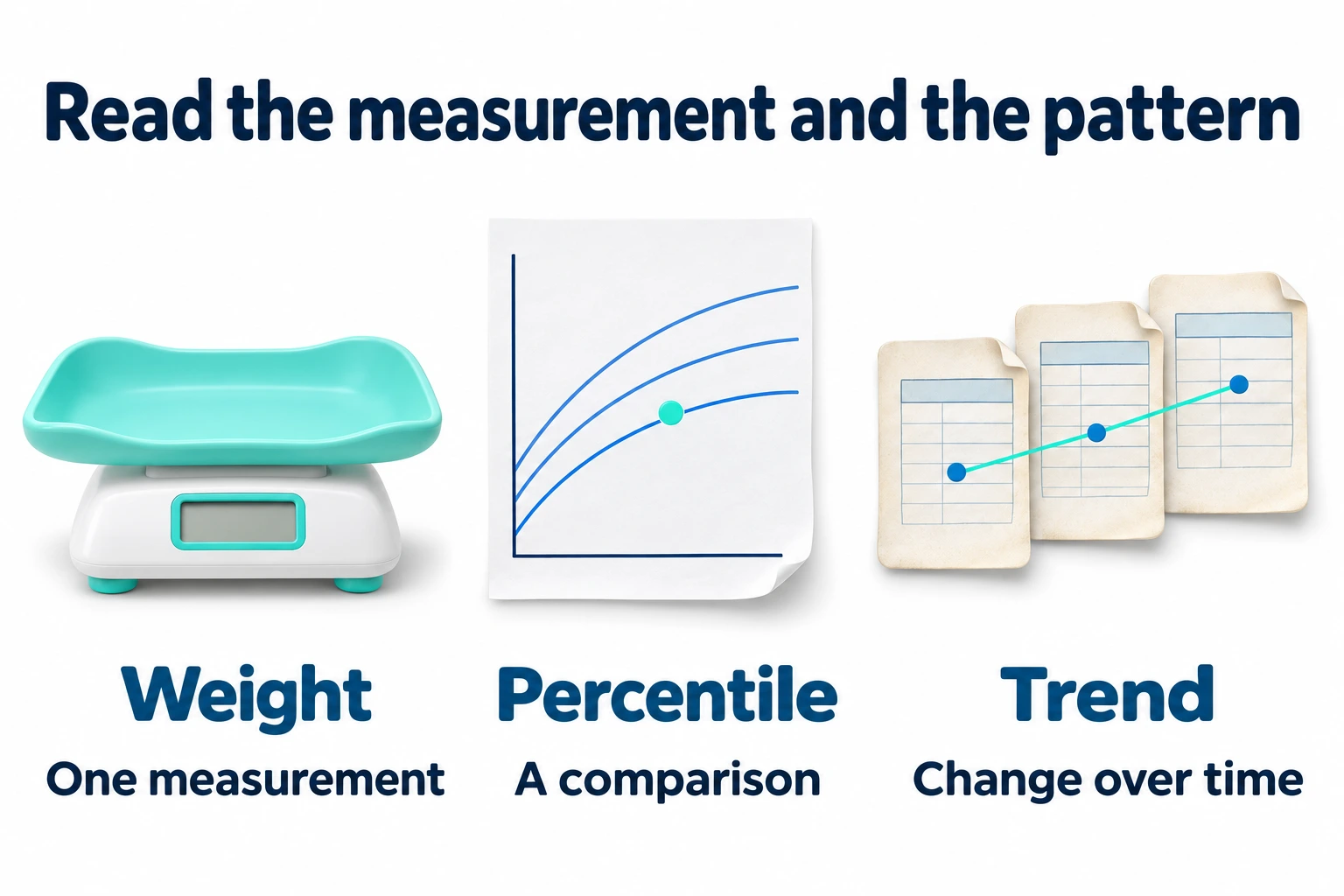
Your child’s visit summary lists a weight and a percentile next to it. The weight tells you what the scale measured. The percentile tells you where that measurement falls on a particular chart. To understand what it means for your child, look back at earlier visits. Here is how to read a growth chart when two numbers seem to tell different stories.
What do growth chart percentiles mean?
First find the name of the chart. A weight for age chart compares weight with other children of the same age and sex in the reference group. The bottom axis shows age. The side axis shows weight. Find your child’s age and weight, then see which curved line runs closest to their point.
Suppose a weight falls on the 25th percentile. Roughly 25 in 100 children in that comparison group weigh the same or less, and the rest weigh more. This number does not tell you what percentage of an ideal weight your child has reached. A child who grows along that curve may be following their own pattern.
What is a weight for length percentile?
Length or height for age tracks how tall a child measures as time passes. Weight for length asks a different question. It compares a baby’s weight with the weights of other babies of the same length and sex. Two babies of different ages can therefore appear at the same point on a weight for length chart.
Why do pediatricians measure head circumference?
For babies, clinicians also measure around the widest part of the head. They compare head circumference with earlier measurements and with the chart for age. If one measurement looks unexpected, the trend helps the clinician decide what needs a closer look.
Why a percentile can change near age two
In the United States, clinicians use World Health Organization charts for most children from birth until age two. These WHO growth chart percentiles use a different reference from the CDC charts used later. At two years, they switch to CDC charts. A toddler may also go from lying down for a length measurement to standing for a height measurement. Standing height is a little shorter than length measured lying down.
The charts may also compare different things. For instance, clinicians move from weight for length to body mass index for age. If the percentile in the portal changes near that birthday, ask which chart and measurement the two entries represent.
Which age goes on the chart for a baby born early?
If your baby was born early, bring both the birth date and the original due date and ask which one the clinic used to plot the point. A preterm baby may have a special chart early on. When clinicians later plot growth on a WHO chart, corrected age counts from the due date. A baby born eight weeks early who is now sixteen weeks old has a corrected age of about eight weeks. The same weight can land on a different curve depending on which age you use.
Questions to bring to a growth visit
What if my child is dropping percentiles on a growth chart?
Ask the clinician to compare the dates, recheck any unexpected measurement and look at the pattern over several visits. A sustained change deserves discussion.
Is the 50th percentile the best place to be?
It marks the middle of the reference group. Children can grow well above or below it. Your clinician looks at how your child grows over time.
Do height and weight need to share a percentile?
They measure different things. Ask how height and weight relate to each other and how both have changed as your child has grown.
Should I bring records from our last practice?
Yes. Dated measurements from past visits let the new clinician see a longer stretch of your child’s growth.
Can a single point show a growth problem?
An unexpected point may prompt a second measurement or more questions. A clinician considers the full history and examination before drawing conclusions.
At the next pediatric visit, ask the clinician to show you today’s point and the earlier points on the same chart.
Sources and further reading
- MedlinePlus guide to reading growth charts (opens in a new tab)
- MedlinePlus explanation of head circumference (opens in a new tab)
- CDC recommended growth charts in the United States (opens in a new tab)
- CDC guidance on using WHO growth standards and changing charts (opens in a new tab)
- Nationwide Children’s Hospital on growth charts for premature babies (opens in a new tab)