
 Dermatology
Both eczema and psoriasis can cause itching, inflammation, and scaling of the skin.
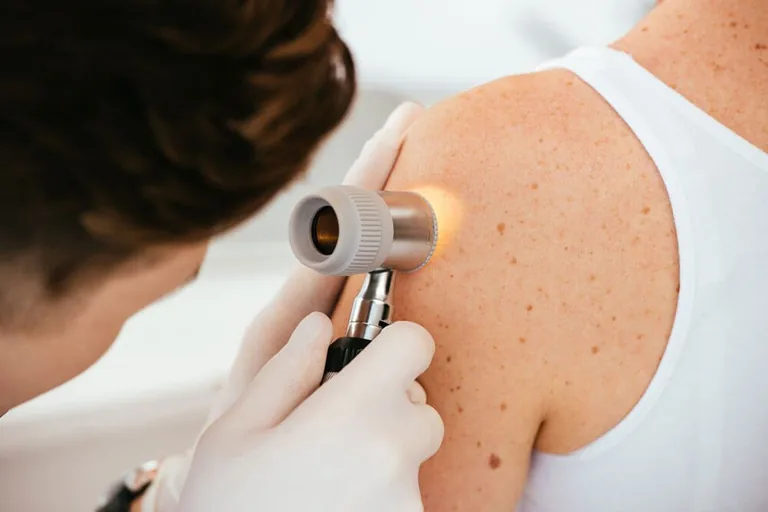
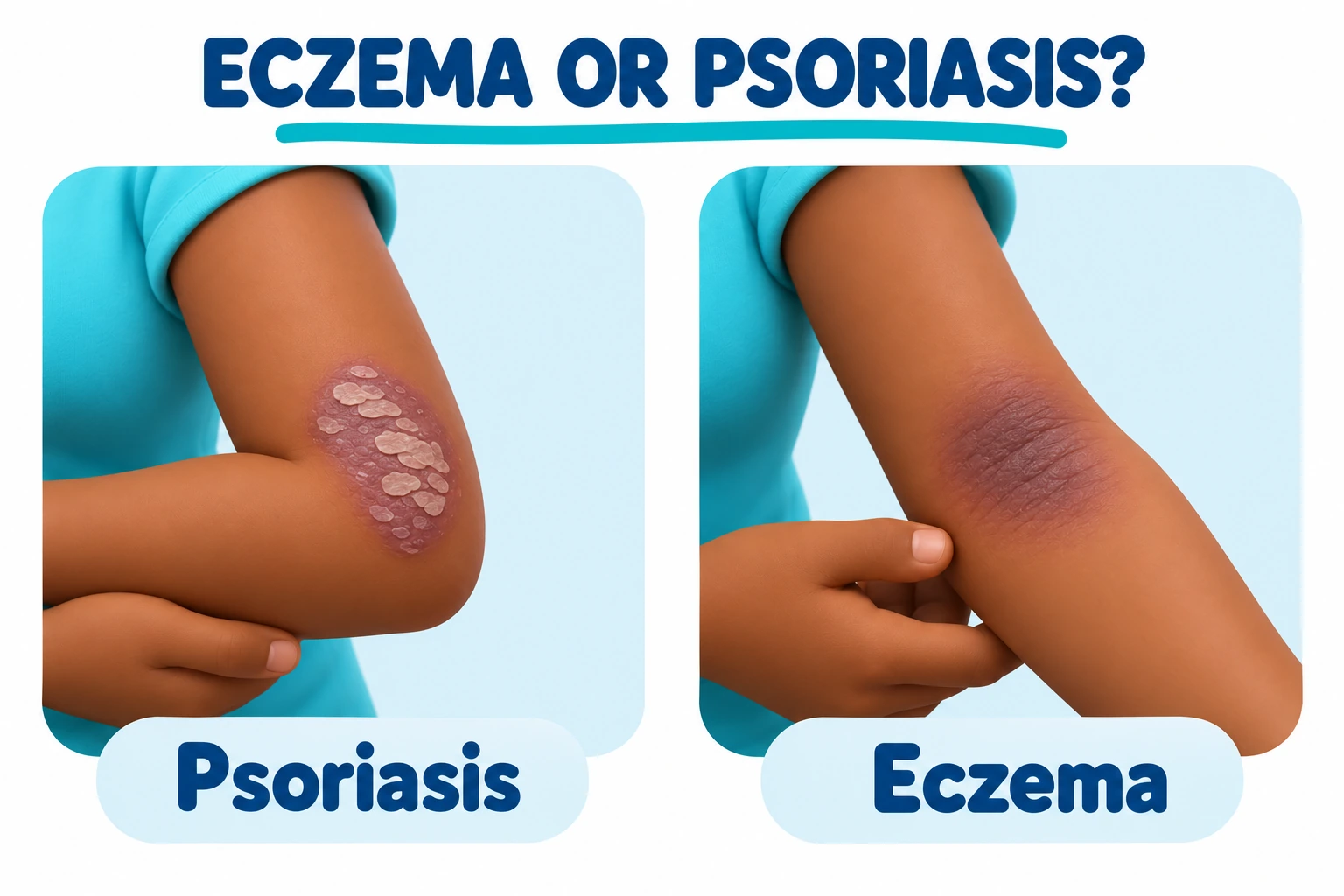
- Location on the body: Different conditions tend to affect particular areas. For example, psoriasis often involves the outer surfaces of the elbows and knees, while eczema often affects joint creases, including the inner elbows and the backs of the knees.
- The history of the rash: How it developed, how it began, and how long it has lasted.
- Associated signs: The condition of the scalp and changes in the nails. Psoriasis often affects the nail plates.
- Joints: Your clinician will ask about joint pain or stiffness because psoriasis can be associated with psoriatic arthritis.
- Care history: Which creams, ointments, or other products you have already used.
What the names mean
Eczema is a broad name for several forms of dermatitis. A common type is atopic dermatitis, which is associated with a disrupted skin barrier and inflammation. Other forms include contact dermatitis and nummular, or coin shaped, eczema, which can cause round patches.
Psoriasis is an immune mediated condition in which skin cells build up too quickly. Its best known form, plaque psoriasis, produces raised, inflamed areas with scales. Other forms include psoriasis in skin folds, where the surface can look relatively smooth.
Neither condition is contagious.
Differences that help distinguish one from the other
| Feature | What is often seen with eczema | What is often seen with psoriasis |
|---|---|---|
| Surface | Dryness, irritation, cracks, and sometimes weeping | Raised, scaly plaques, depending on the type and location |
| Borders | Less clearly defined inflamed areas | More clearly defined plaque borders |
| Common locations | Skin folds, hands, face, and other areas depending on the type | Scalp, elbows, knees, lower back, and other areas |
| Sensation | Itching, sometimes severe | Itching, burning, soreness, or cracks |
| Other clues | Contact with irritants or allergens and a history of atopic conditions | Nail pitting, nail separation, and sometimes joint symptoms |
Longstanding eczema can cause skin thickening and scaling. Psoriasis can be very itchy.
Skin color affects the comparison
Inflammation does not look bright red on every skin tone. On dark skin, psoriasis may look purple, brown, or grayish, sometimes with gray scales. Eczema can also look darker, lighter, or less obviously red than examples in image searches.
Pigment changes sometimes remain after active inflammation settles. A dark patch therefore does not always mean that disease activity is unchanged. Skin texture, scales, warmth, symptoms, and changes over time help a clinician assess what they see.
Scalp and hand symptoms need a careful assessment
Scalp psoriasis may produce thicker, more clearly defined scales and extend beyond the hairline. But dandruff and seborrheic dermatitis also cause itching and scaling.
On the hands, frequent washing, cleaning products, gloves, and workplace exposures can contribute to dermatitis. Psoriasis can also produce thick, cracked areas on the palms.
Nummular eczema can look similar, and a fungal infection sometimes resembles either condition. If an examination does not give a clear answer, the clinician may take a skin scraping, perform another test, or carry out a biopsy.
Nails and joints provide information that a rash alone cannot show
Psoriasis can cause small pits in the nails, nail separation, or a buildup of tissue beneath the nail. Fungal infections and other problems can cause some similar changes.
Joint symptoms with psoriasis
Symptoms to pay attention to
- Swelling of the fingers or toes, sometimes described as sausage shaped digits.
- Joint pain.
- Morning stiffness or prolonged joint stiffness after rest.
Why a new patch sometimes follows the line of an old scratch
In some people with psoriasis, a new patch develops where the skin has been injured, for example along a scratch or in an area of friction. This is called the Koebner phenomenon. It develops after the injury itself, so the connection may not be obvious at first.
Eczema can also worsen with irritation.
When signs of eczema and psoriasis overlap
Overlap is possible. A rash can have features of both conditions, and sometimes the initial diagnosis needs to be reconsidered as the picture becomes clearer.
Bring the names of the creams, shampoos, and tablets you have used, including concentrations or doses if possible.
What to do before your visit and at home
Safe home care
- Gentle care: Use gentle, hypoallergenic products without harsh fragrances or soap that do not damage the skin barrier.
- Do not introduce too much at once: Do not apply several new creams or ointments at the same time. Otherwise, you will not be able to tell which product helped and which caused irritation.
What is strictly prohibited
- Do not use someone else's steroid medicines: Do not use strong prescription steroid ointments borrowed from friends or relatives. The wrong strength or type of medicine can blur the symptoms and make diagnosis more difficult.
- No unsupervised treatment for fungus: If you suspect a fungal infection, or think it might be one, do not treat it yourself for months without another examination and accurate confirmation of the diagnosis.
When a rash should not be treated as an ordinary flare
Arrange a routine medical appointment if:
- The rash persists and does not settle with basic gentle care.
- Severe itching or pain interferes with sleep or everyday activities.
- The skin at the rash site develops painful cracks, creating a risk of infection.
Once a diagnosis is established, the treatment discussion becomes more specific. Health Med has separate articles on eczema treatment options and psoriasis treatment options. If a diagnosis has not yet been established, the first priority is to make sure that the condition's name matches what is actually happening to the skin.
Sources
- NIAMS: Atopic Dermatitis (opens in a new tab)
- NIAMS: Psoriasis (opens in a new tab)
- American Academy of Dermatology: Differences Between Eczema and Psoriasis (opens in a new tab)
- National Psoriasis Foundation: Psoriasis in Skin of Color (opens in a new tab)
- American Academy of Dermatology: Diagnosing Psoriasis (opens in a new tab)
- American Academy of Dermatology: Nail Psoriasis (opens in a new tab)
- DermNet: The Koebner Phenomenon (opens in a new tab)
- Utah Valley Dermatology: Psoriasis and Eczema (opens in a new tab)
- American Academy of Dermatology: Nummular Eczema Diagnosis (opens in a new tab)