
 Wound care
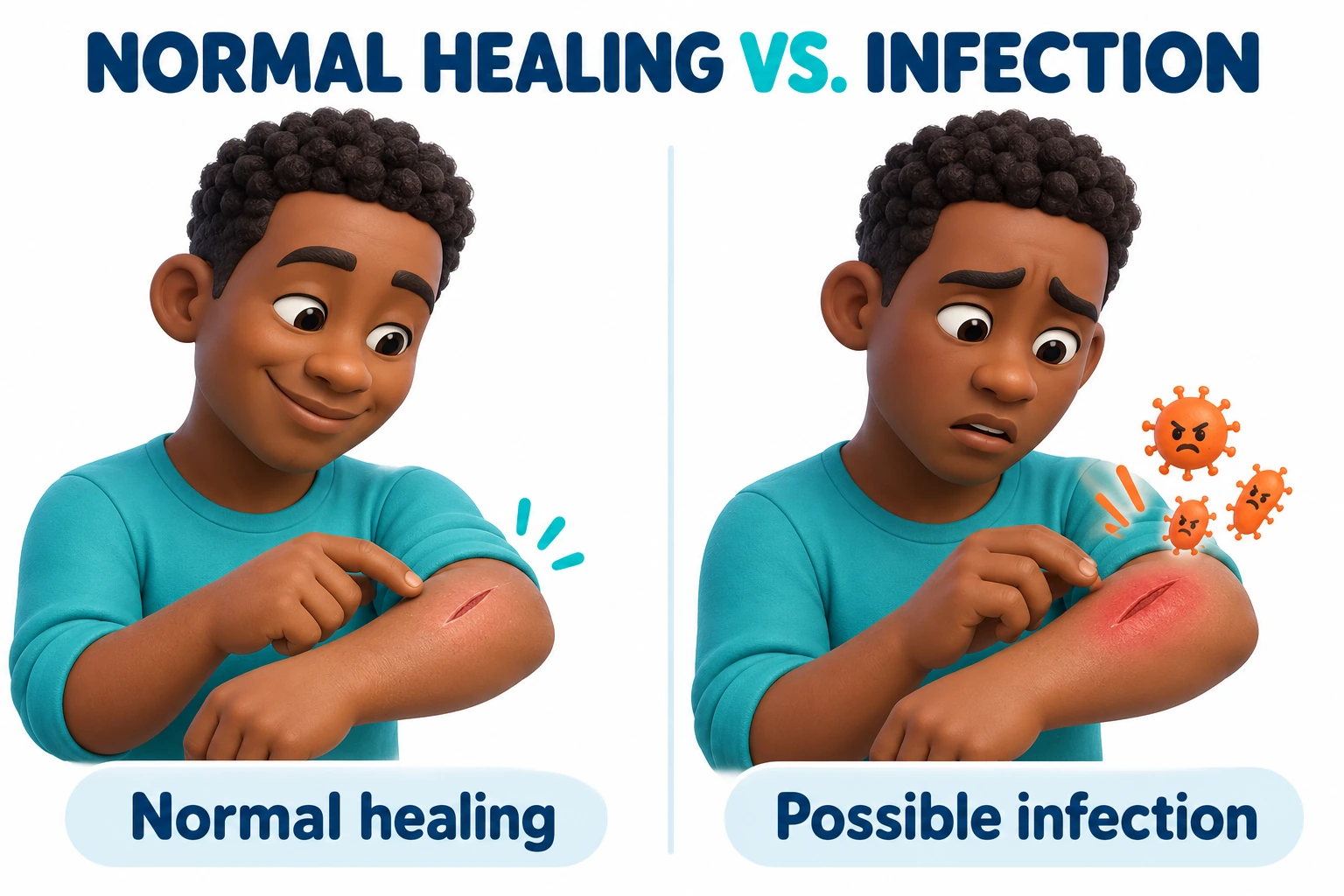
Normal healing versus infection
- The normal process: Mild pain, slight warmth, or swelling immediately after a cut is a normal response from the body. The main sign of healing is a trend toward improvement: discomfort gradually decreases over time, and swelling goes down.
- Signs of infection or worsening: Pain begins to increase, redness around the wound spreads, new pus appears, or the condition gets worse after the wound had already started to heal.
Early in healing, a cut can be slightly sore, warm, or swollen. These signs partly overlap with signs of infection, so looking at the skin once may not be enough. What matters is the direction of change: gradually decreasing discomfort is different from increasing pain, spreading redness, or new pus after the wound had already begun to improve.
What normal healing looks like
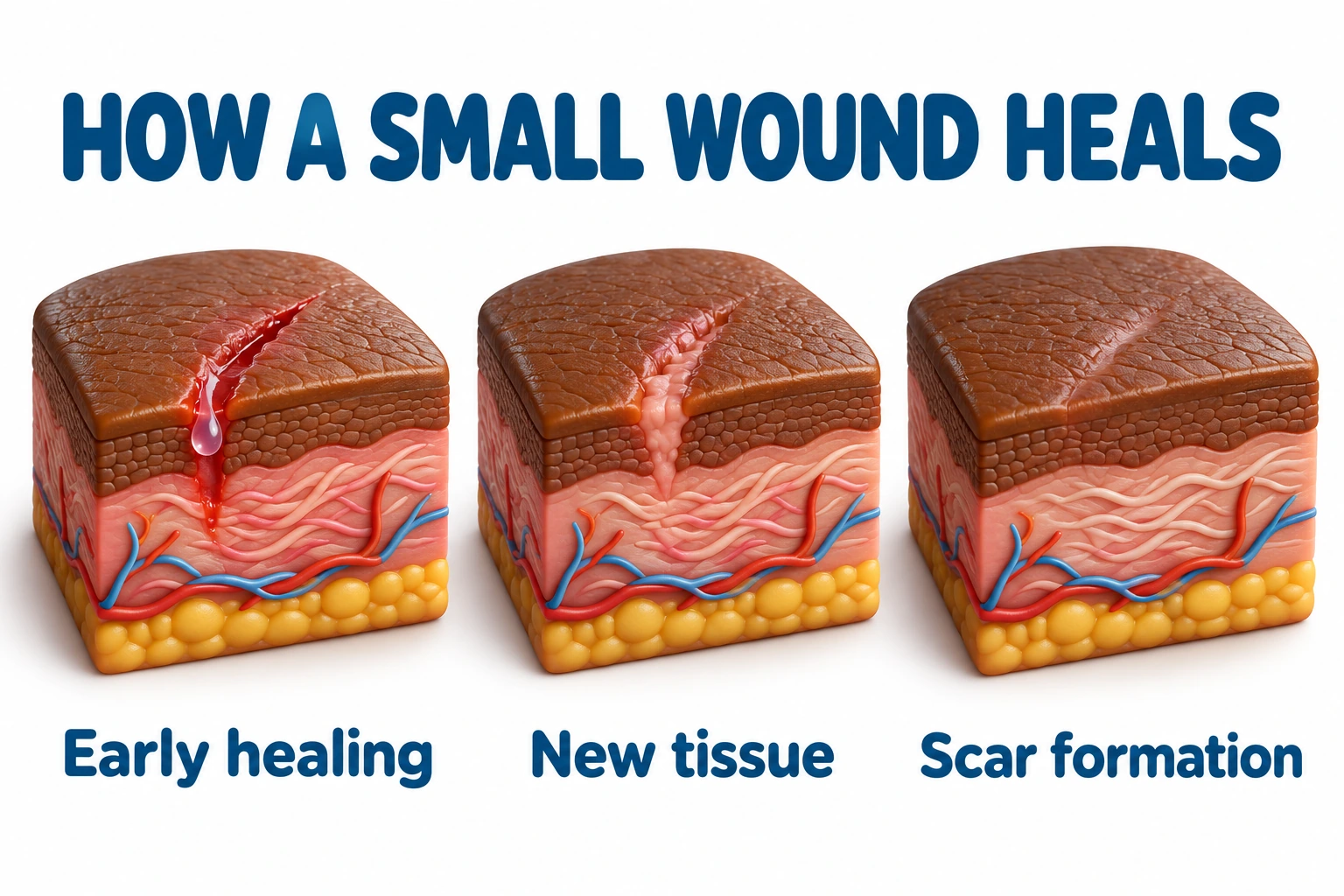
- At the beginning: A small amount of clear fluid and moderate soreness can occur.
- New tissue: Fresh skin at the healing site may be pink or bright red and remain sensitive.
- The scar: A scar forms at the wound site over time. Its color or texture may differ from the surrounding skin for a long time after the surface has closed.
After an injury, the body stops the bleeding, sends immune cells to the area, creates new tissue, and gradually strengthens the repaired area.
A small amount of clear fluid and some early soreness can accompany healing. New tissue sometimes looks pink or red and remains sensitive. Later, a scar may differ in color or texture long after the surface has closed.
Which changes suggest infection?
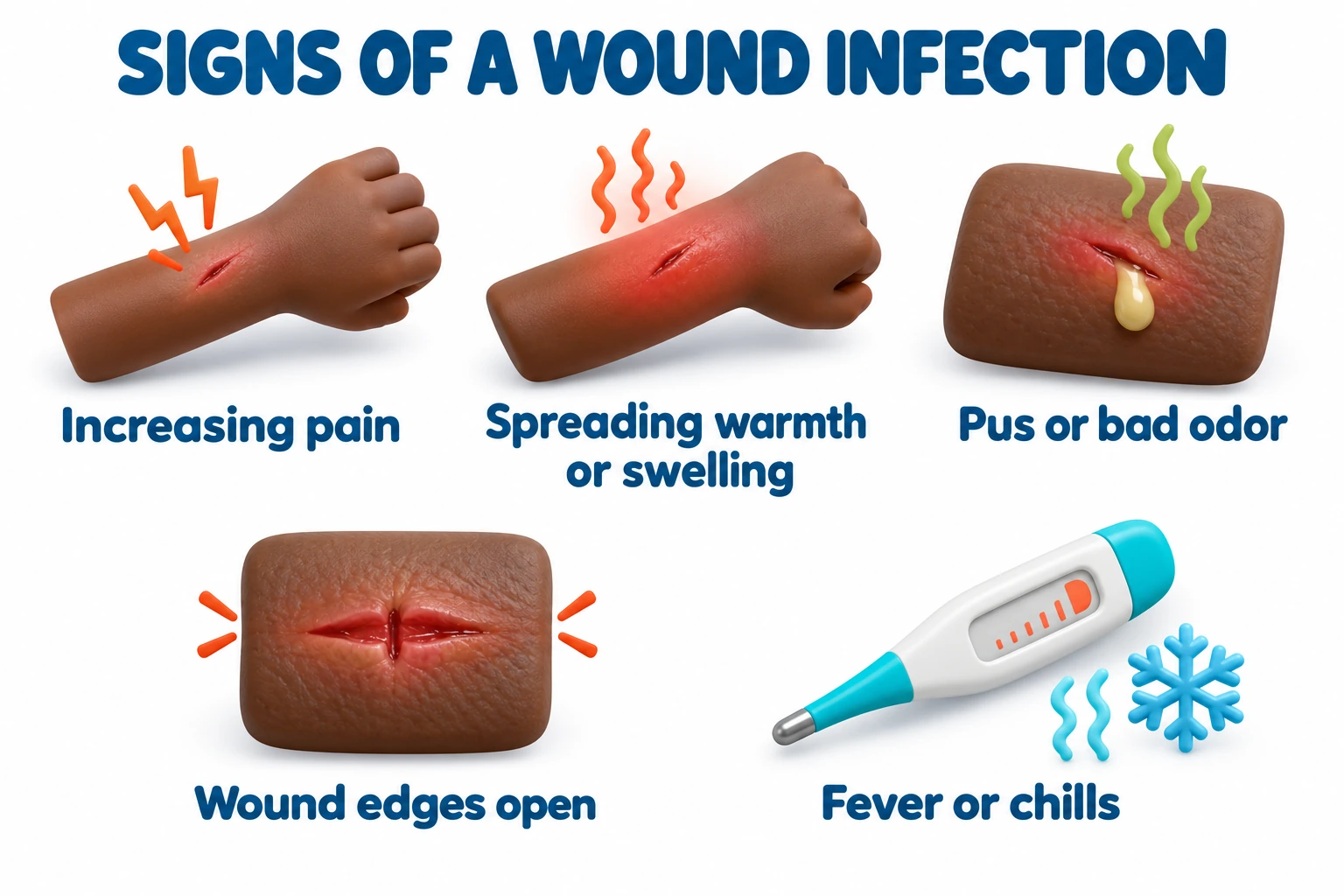
| What you notice | A more reassuring direction | A reason to seek assessment |
|---|---|---|
| Pain | Gradually decreases | Increases or returns after improvement |
| Surrounding skin | Local irritation settles | Warmth, swelling, or color changes spread |
| Drainage | A small amount decreases | Pus appears, drainage increases, or an unpleasant odor develops |
| Wound edges | Come together as the wound closes | Separate as the wound enlarges or breaks down |
| How you feel | Otherwise well | Fever, chills, weakness, or increasing illness |
Yellow drainage
Pus can be yellow or green. A small amount of thin drainage is different from thick, opaque discharge accompanied by increasing pain or spreading inflammation.
If you are unsure, describe the amount, thickness, smell, and whether the drainage is increasing. Tell your clinician when you last changed the dressing. Do not scrape the surface to find out what a yellow area is, and do not squeeze the wound to see whether more fluid comes out.
A rash around a cut
Antibiotic ointments can cause contact dermatitis, an irritation or allergic rash. Someone may apply more ointment because the surrounding skin is becoming red and itchy, only to make the reaction to the product worse. Adhesive on dressings can also irritate the skin.
Simple care and plain petroleum jelly are often enough for an uncomplicated superficial injury.
Caring for a small cut
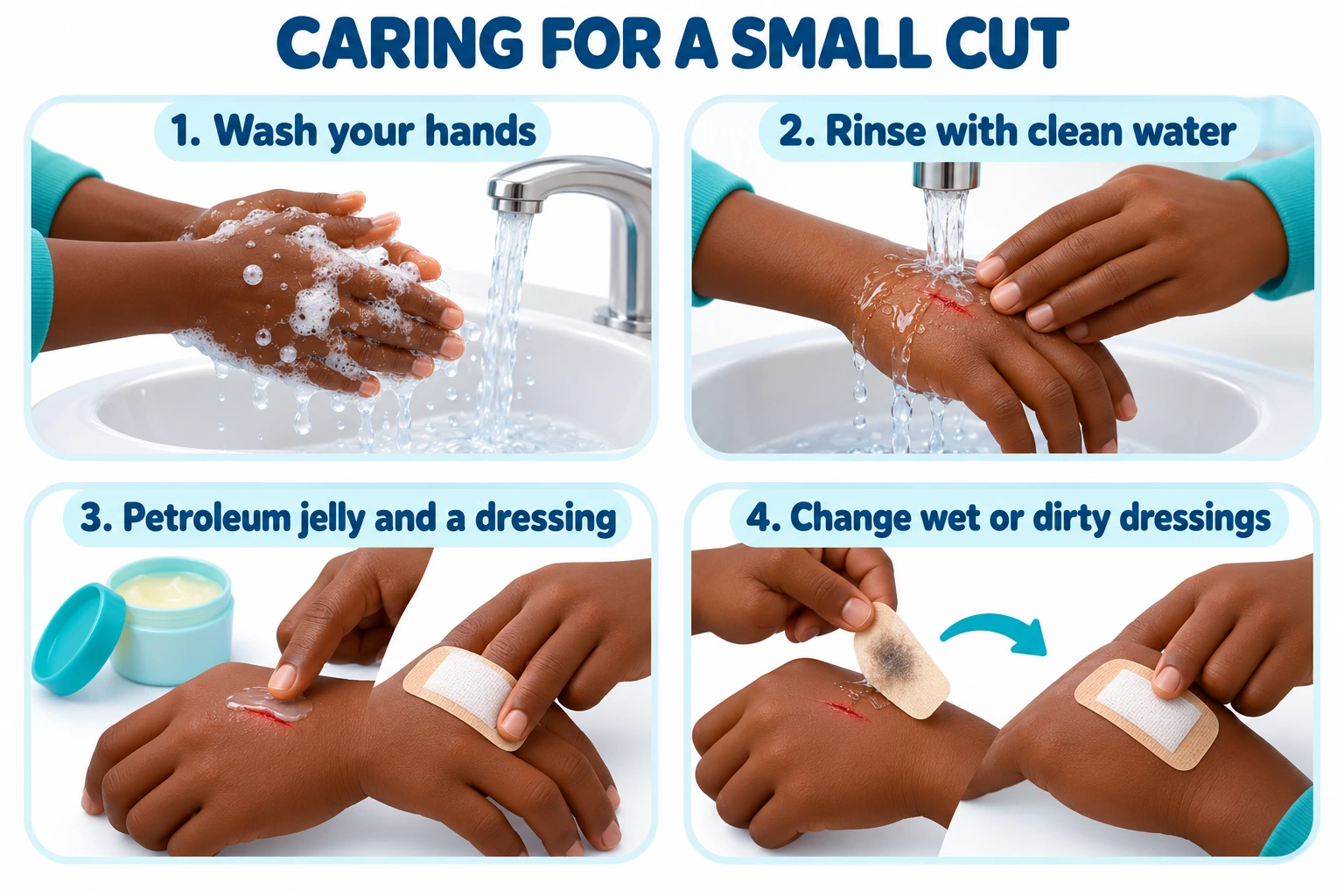
1. How to clean and protect the wound
- Hygiene: Wash your hands thoroughly before doing anything to the wound.
- Rinsing: Rinse the wound with clean running water and gently clean the skin around it.
- Protection: Apply a thin layer of plain petroleum jelly and cover the wound with a suitable clean dressing. This protects the surface and prevents it from drying out.
- Changing the dressing: Change the dressing whenever it becomes wet or dirty, following the instructions you were given closely.
2. What not to do
- No harsh chemicals: Do not repeatedly pour hydrogen peroxide or iodine into the wound. This damages and irritates healing tissue.
- No improvised treatment: Do not pick off a forming scab or try to cut away tissue yourself.
Tetanus protection is a separate question
A wound can look clean and still call for a check of your tetanus vaccination history.
1. Booster timing if the primary vaccination series was completed
- For clean, minor wounds: A booster is needed if 10 years have passed since the last vaccination.
- For dirty or serious wounds: A booster is needed if 5 years have passed.
2. When a separate assessment is needed
- If the vaccination history is unknown or incomplete.
- For wounds with a higher risk, such as punctures, animal bites, or contaminated injuries. In these cases, the clinician may recommend not only vaccination but also additional protection, such as tetanus immune globulin.
3. Important rules
- Antibiotics do not replace a tetanus vaccination. These are entirely different forms of protection.
Tetanus is a serious, potentially fatal infectious disease that affects the human nervous system.
It is caused by the bacterium Clostridium tetani, whose spores are widespread in soil, dust, and animal feces. The spores can survive in the environment for years and enter the body through even very small breaks in the skin, including cuts, scratches, splinters, punctures, or bites.
When urgent care is needed
1. Warning signs of wound infection and local complications
- Inflammation begins to spread, pain increases, pus appears, or red streaks become visible, a sign of lymphangitis.
- The wound breaks down or its edges separate, as with deep or gaping wounds.
- Foreign material remains inside the wound and cannot be rinsed out with water.
- Bleeding does not stop after several minutes of firm, direct pressure.
- Fever or a general feeling of illness develops.
2. When to call 911 for life threatening symptoms
- Rapidly worsening pain and feeling seriously unwell.
- Confusion, fainting, or difficulty breathing.
- Animal or human bites, which always require professional wound care because of the high risk of serious infection.
If a wound simply is not healing
A wound that stays open, repeatedly reopens, or shows little improvement needs assessment even without an obvious infection. Pressure, poor blood flow, swelling, high blood sugar, and other factors can interfere with healing. A stronger cream will not necessarily address these causes.
Write down when and how the injury happened and which products you have used. A dated photograph can help the clinician track changes, but it should complement an examination when one is needed.
Sources
- MedlinePlus: How Wounds Heal (opens in a new tab)
- OSF HealthCare: How to Tell if a Wound Is Healing or Infected (opens in a new tab)
- American Academy of Dermatology: When to Use Antibiotics on Your Skin (opens in a new tab)
- American Academy of Dermatology: Proper Wound Care (opens in a new tab)
- Mayo Clinic: Cuts and Scrapes First Aid (opens in a new tab)
- CDC: Wound Management to Prevent Tetanus (opens in a new tab)
- CDC: About Sepsis (opens in a new tab)