
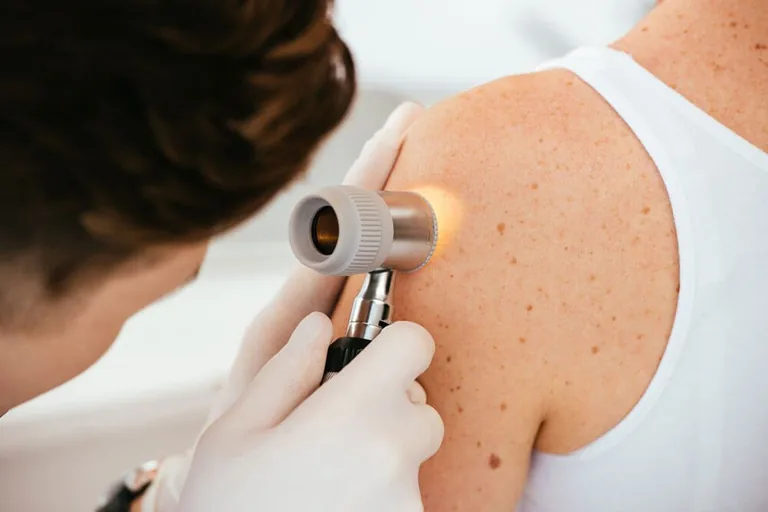
 Dermatology
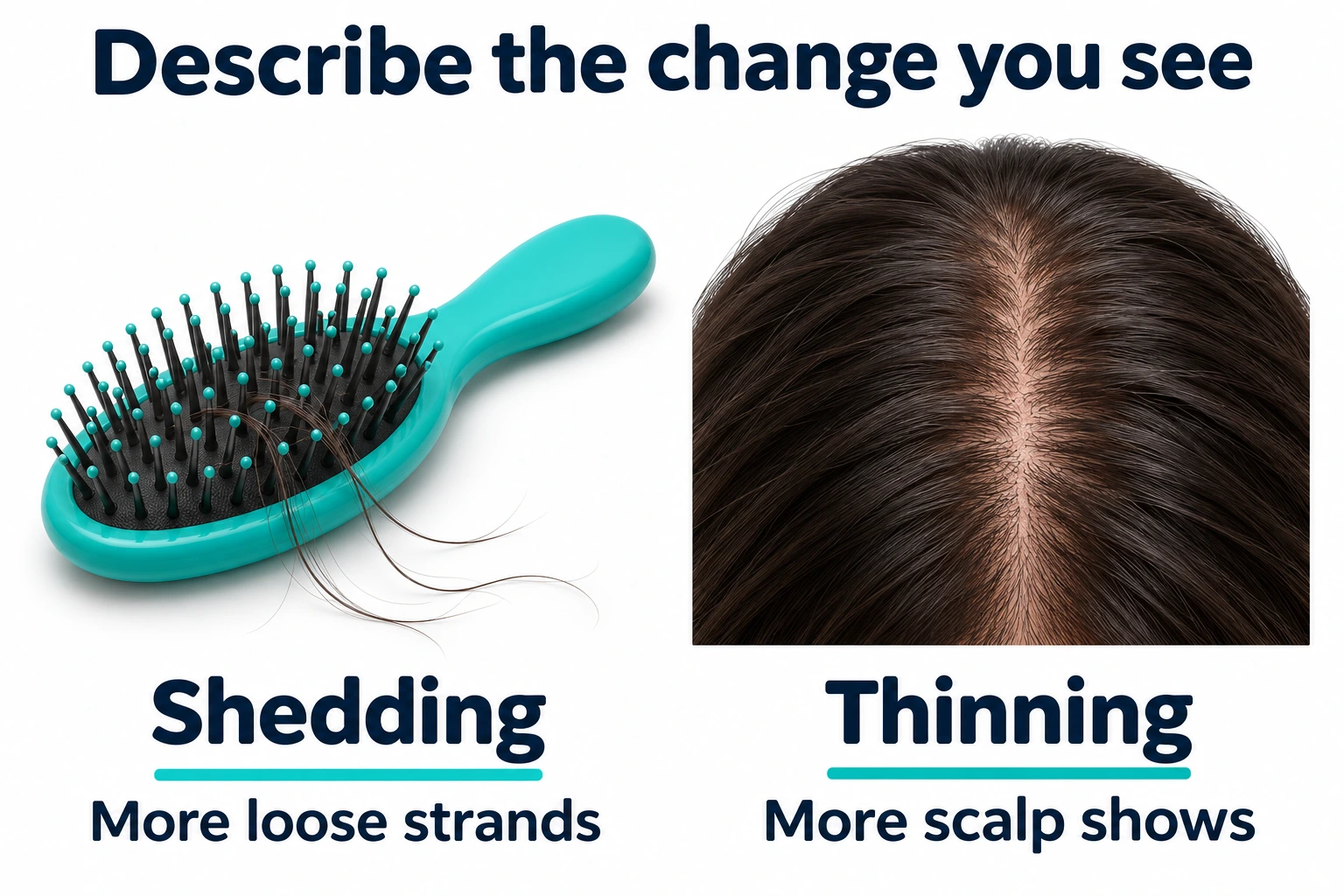
A brush full of hair and a part that looks wider tell two different stories. The first tells you that strands came away. The second tells you that you can see more scalp in one area. You might notice both. Start with the change that caught your attention and when you first saw it.
Hair thinning vs. shedding and what to look for
Hair grows in cycles. Some strands reach the end of their cycle and shed while others grow. After a high fever, childbirth or another major strain on the body, more hairs can enter the resting phase together. Extra shedding can show up a few months later. Think back beyond the week you first noticed hair in the drain.
Shedding from across the scalp
You might notice loose strands when you wash, brush or change your pillowcase. Describe whether this looks different from your own usual pattern. A single wash tells a clinician little about what happened over the past several weeks.
How do you know if your hair is thinning?
Look at the part, the hairline and any spot you can now see through. A widening part or a ponytail that feels smaller can develop over months. A new bare patch can appear much faster. Tell the clinician which change you saw first.
Hair breakage vs shedding
A strand can snap somewhere along its length. You might see short fragments or an uneven area after repeated heat, bleach or tension. Finding a short hair does not prove that it broke. A clinician can examine the scalp and shafts if you cannot tell whether the hairs snapped or shed.
Build a timeline you can bring to a visit
Write down the first month you noticed a change and whether it has spread or improved. If you have an older photo that shows your usual part, bring it. For a new photo, part the hair in the same place and use similar light. Add any itching, pain, burning or scale. Those details matter even if photographs look alike.
Details worth remembering
Mention a recent illness, birth, operation, major weight change or new medicine. Include the dates if you know them. If you wonder whether a prescription plays a role, ask the prescriber before you make a change.
When wash day looks different
If a shower brings out an unusual amount of hair, write down how many days passed since your last wash. Loose strands can come away together after a longer gap between washes. Compare what you notice after similar intervals. A larger clump after several days tells you little on its own about whether your hair is getting thinner.
Common questions about normal hair shedding vs. hair loss
How much hair shedding is normal?
Many people shed about 50 to 100 hairs a day. Counting every strand is rarely practical. Describe what has changed for you and whether your scalp coverage has changed too.
Can shedding and gradual hair loss happen together?
Yes. Bring up both findings. An episode of extra shedding does not explain every change in the hairline or part.
How can women tell normal hair shedding from hair loss?
The hairs in your brush show what came loose. In women, a part that has grown wider can be an early sign of pattern hair loss. A dermatologist can check whether shedding and a change in coverage are happening together.
Is hair shedding seasonal?
A study of women who reported hair loss found seasonal changes in the proportion of resting hairs. That pattern cannot tell you why you are shedding now. Report a patch, scalp discomfort or continued loss of fullness even if you noticed shedding at this time last year.
Should I wait to see a dermatologist about a bare patch?
Arrange an assessment for a new patch, especially if the skin also hurts, burns or looks inflamed. You do not need months of photographs first.
What if I never see more hair in the shower?
A gradual change in coverage can be the first thing you notice. Say where you see it and whether an older photograph shows the same pattern.
For a dermatology visit, bring your timeline and any photos that show the change.
Sources and further reading
- American Academy of Dermatology on shedding and hair loss (opens in a new tab)
- American Academy of Dermatology on early signs (opens in a new tab)
- American Academy of Dermatology on the diagnostic visit (opens in a new tab)
- DermNet on hair and shaft changes (opens in a new tab)
- Cleveland Clinic dermatology guidance on shedding in the shower (opens in a new tab)
- University of Basel research on seasonal hair cycling in women (opens in a new tab)