
 Primary care
Swallowing hurts and you see white spots on the tonsils. That can happen with strep throat, but the spots alone cannot tell you what caused the pain. A sore throat is a symptom. Strep throat is one possible cause, an infection with group A strep bacteria. Viruses cause most sore throats.
How to tell if a sore throat is strep or part of a cold
A cough, runny nose, hoarse voice or red eyes makes a virus more likely. When the picture clearly fits a virus, a clinician can often assess the illness without a strep test.
Strep throat can start suddenly, with pain on swallowing, fever and tender glands near the front of the neck. Some children also report a headache or stomachache. Tell the clinician if someone in your household had confirmed strep. When viral symptoms are absent, even an experienced clinician cannot reliably distinguish strep from a virus by looking at the throat.
Rapid strep test vs throat culture
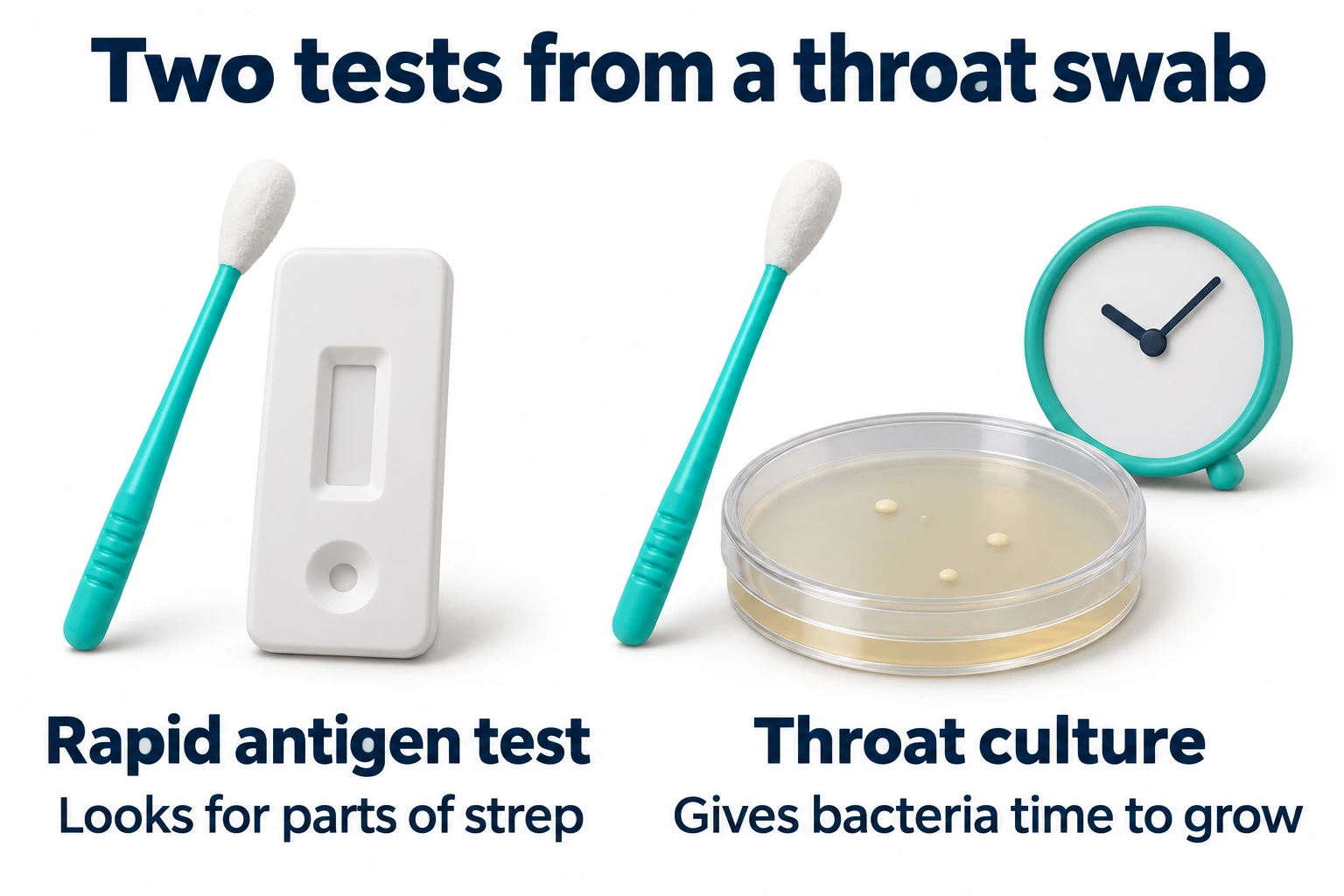
Both tests begin with a swab of the throat. A rapid antigen test looks for parts of the strep bacteria and can give an answer during the visit. A positive result supports a diagnosis of strep when the symptoms fit. A negative rapid result can miss some infections.
A throat culture gives bacteria time to grow in the lab. It takes longer and can detect strep that a rapid antigen test misses. For a child age three or older with symptoms and a negative rapid antigen result, CDC recommends a culture to double check. Adults seldom need a culture after a negative rapid antigen test. Ask how and when you will get any pending result.
When the throat swab was difficult
If your child pulled away during the swab, ask the person who collected it whether they reached the intended area. The clinician samples the tonsil area and the back wall of the throat. A child who gags may still have given a usable sample. If you call later, say whether the result was from a rapid antigen test or a culture and describe any new symptoms. Let the clinician decide whether another swab would help.
When the next step is urgent
Get emergency help if the person struggles to breathe. A child who starts drooling because they cannot swallow saliva needs urgent care. Tell the clinician if throat pain prevents drinking or if a child urinates much less than usual. These changes affect how soon the person needs assessment, whatever the cause of the sore throat.
If a sore throat gets worse or fails to improve over several days, contact a clinician even if an earlier test was negative. Describe what has changed since the test, including the ability to drink and any new rash.
Questions about strep and a sore throat
Can you have strep with a cough?
A cough can occur alongside a sore throat from many causes. It makes a virus more likely. Tell the clinician if someone at home has confirmed strep.
Can strep throat cause a runny nose?
A runny nose is unusual with strep. When it arrives with a cough or hoarseness, a cold is a more likely cause of the sore throat.
Can you have strep without a fever?
Fever is common with strep. A single normal temperature cannot settle the question. Mention how the throat pain began and any medicines taken for fever.
Do white spots on the throat mean strep?
Several infections can affect the tonsils. Patches alone cannot establish the cause or tell the clinician whether a test would help.
Should my toddler have a culture after every sore throat?
Classic strep throat is uncommon before age three. Tell the pediatrician about close exposure and symptoms so they can decide what evaluation fits.
What if I feel well but a swab shows strep?
Some people carry group A strep without illness. Ask the clinician who ordered the swab how the result fits the reason for testing.
When you call about a sore throat, give the person’s age, the first day of symptoms and whether swallowing liquids has become difficult.
Sources and further reading
- CDC clinical guidance on group A strep throat (opens in a new tab)
- CDC guide to testing for strep throat (opens in a new tab)
- CDC patient guide to strep throat (opens in a new tab)
- CDC guide to sore throat symptoms and care (opens in a new tab)
- Seattle Children’s guidance on urgent sore throat symptoms (opens in a new tab)
- Canadian Paediatric Society on collecting a throat swab for strep (opens in a new tab)