
 Pediatrics
Your child swam on Saturday, caught a cold on Monday and now says one ear hurts. Which detail matters? Tell the clinician about both. When parents ask about swimmer’s ear vs. ear infection, they often mean an infection behind the eardrum. Swimmer’s ear affects the canal that leads from the ear opening to the eardrum. A middle ear infection develops on the far side of the eardrum. A look inside the ear can help tell them apart.
When the ear canal hurts
Moisture that stays in the canal can make it easier for bacteria to grow. A child may describe an itch that turns into pain. Some children notice that touching the outer ear hurts as they brush their hair or put on a shirt. You may also see fluid at the ear opening.
A recent swim is one clue. Scratching the canal or putting objects into it can also irritate the skin. Leave the canal alone. When you call, describe what your child has already noticed during normal activities.
When the trouble is behind the eardrum
A middle ear infection can follow a cold. Swelling can interfere with drainage through the tube that connects the middle ear to the back of the nose. Fluid gathers behind the eardrum. A child may have pain, a fever or trouble hearing quiet sounds.
A baby may pull at an ear, wake often or seem unusually fussy. Those signs tell you that something may hurt. They do not identify the part of the ear involved. Tell the clinician if your child has been congested or has trouble hearing you.
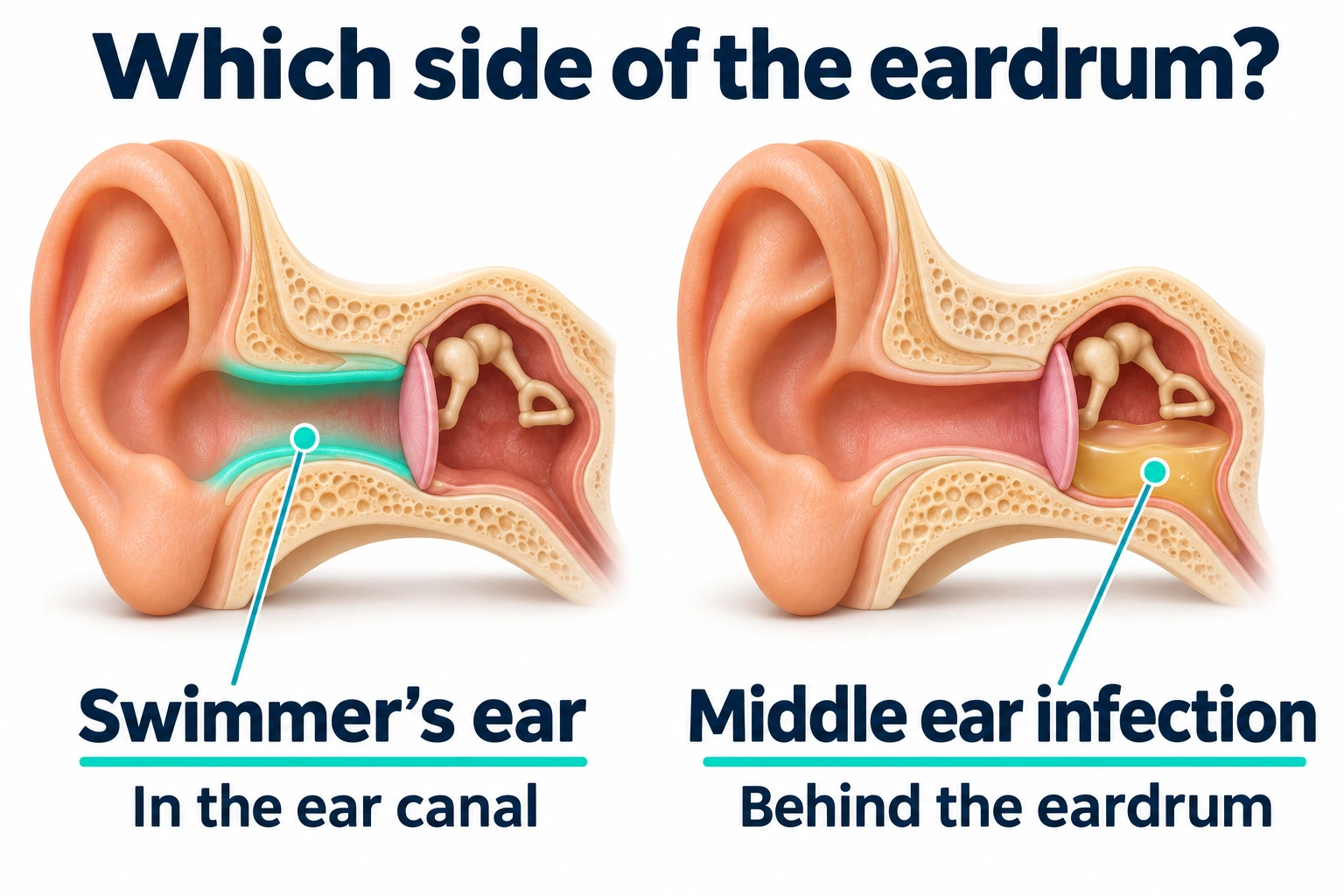
Outer ear infection vs. middle ear infection on exam
A clinician uses a lighted instrument to examine the canal and eardrum. With swimmer’s ear, swelling can narrow the canal. A bulging eardrum can point to a middle ear infection. The clinician may check how well the eardrum moves to see whether fluid lies behind it.
Call promptly about drainage, worsening pain, hearing loss or a child who seems unwell. A baby younger than three months with a temperature of 100.4°F (38°C) or higher needs medical advice right away. Mention the baby’s age and the measured temperature when you call.
When the child already has ear tubes
If a child with ear tubes wakes up with a wet pillowcase, tell the clinician which ear drained and whether the pain changed when the fluid appeared. A working tube lets fluid from behind the eardrum reach the ear opening. A middle ear infection can therefore cause visible drainage and less pain than you might expect. Mention the tube when you call about new drainage, even if your child has no fever.
Questions parents ask about ear pain
Can you get swimmer’s ear without swimming?
Yes. The ear canal can also become irritated by scratching or a cotton swab. Tell the clinician if your child recently put something in the ear.
Does swimmer’s ear cause fever?
Some children with an outer ear infection develop a fever. The temperature alone cannot show whether the infection involves the canal or the middle ear.
Is fluid behind the eardrum always an infection?
Fluid can remain after a middle ear infection settles. It can affect hearing for a time. Ask when to return if you still notice hearing trouble.
Can I tell where the infection is by the drainage?
Several ear problems can cause drainage. Describe when you saw it and whether pain or hearing changed. The clinician will examine the ear.
What details should I have ready on the phone?
Note which ear hurts, when pain started and any fever or drainage. Mention ear tubes, past ear problems, a recent cold and time spent in water.
Ask your child’s care team what changes in pain, drainage or hearing should prompt another examination.
Sources and further reading
- CDC guide to swimmer’s ear (opens in a new tab)
- National Institute on Deafness and Other Communication Disorders guide to ear infections in children (opens in a new tab)
- CDC guide to middle ear infections and medical care (opens in a new tab)
- Royal Children’s Hospital guide to outer ear infection (opens in a new tab)
- American Academy of Otolaryngology caregiver guide to ear tubes (opens in a new tab)