
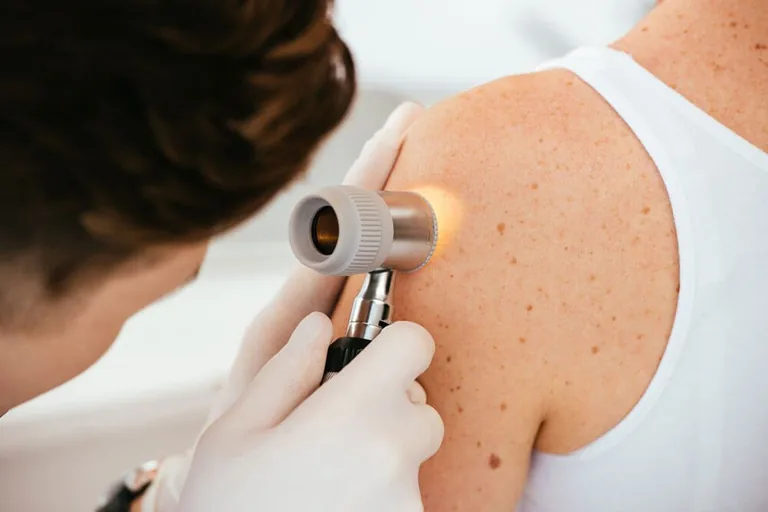
 Dermatology
You have a mole on your shoulder that you have seen for years. Today one edge looks darker. If you call for a skin exam, how do you describe what caught your eye? The ABCDE melanoma checklist gives you words for that conversation. A new or changing spot deserves attention even if only one feature stands out.
How to use the ABCDE rule for moles
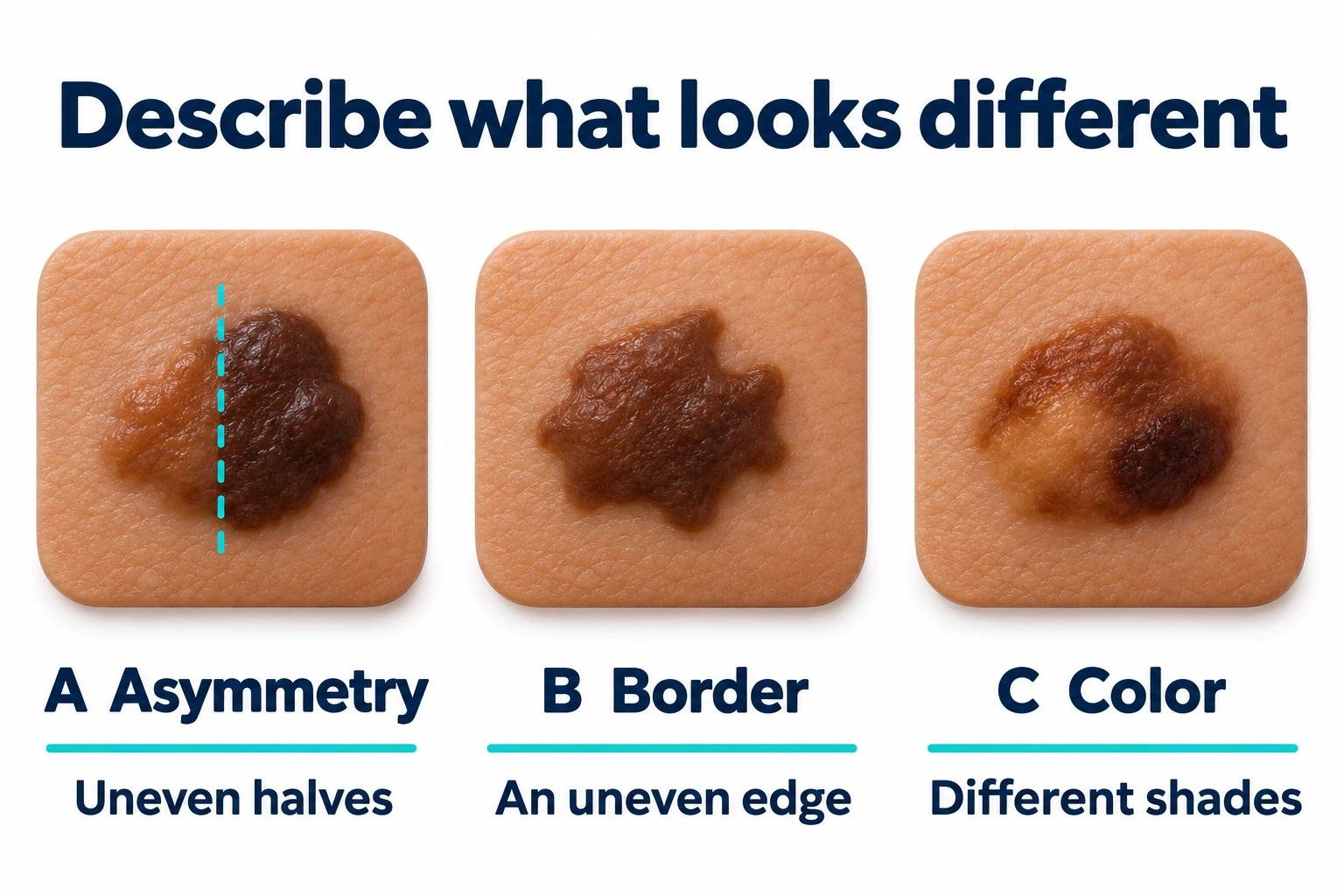
A means asymmetry
Look at the overall shape. If you imagine a line through the center, does one side look different from the other? You might describe one half as round and the other as longer or wider.
B means border
Follow the outline with your eyes. Is one section uneven, notched or hard to separate from the surrounding skin? Say which part of the edge looks different.
C means color
Describe the shades you see within the same spot. For example, you might see a dark area near the edge of a lighter brown mole. Changes can also involve red, white or blue.
D means diameter
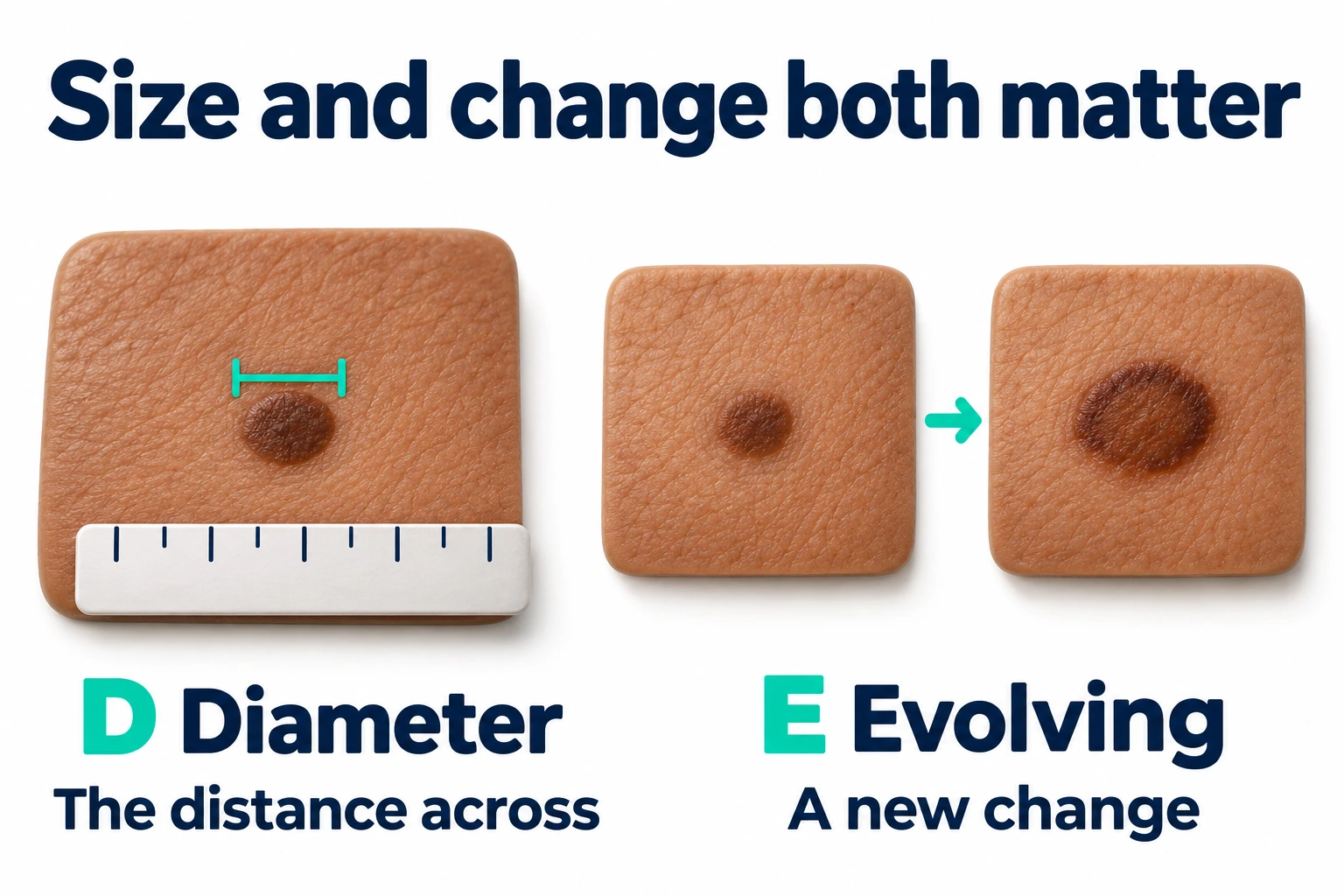
Diameter is the distance across a spot. Six millimeters is about the width of a pencil eraser. Some melanomas measure less. A change in a small spot still matters.
E means evolving
Think about what is new for this spot. Has it widened, changed shape or gained another color? Mention a new itch, bleeding or a change in the surface, too.
What is the ugly duckling sign?
A mole can draw your attention because it looks unlike the rest of your moles. Clinicians sometimes call this the ugly duckling sign. If most of your moles have a similar look and one seems unlike its neighbors, point it out at the exam.
People can develop melanoma in a new spot as well as in an existing mole. Some melanomas show few of the ABCDE features. A new spot between the toes, on a sole or under a nail also deserves attention if it changes or looks unusual. You can make the call without finding a name for what you see.
A useful description for the appointment
Start with the place on your body and the date you first noticed the change. Then describe what looks or feels different. For example, you might tell a clinician that a spot on your left shoulder has developed a darker edge since you saw it last month.
If you have a dated picture that shows how the area used to look, bring it. Arrange the examination when you notice the change. Waiting to collect a series of photographs could delay a needed assessment.
How to show which mole you mean
If several moles look alike, take one photo from far enough away to show a landmark, such as your elbow, and a second photo close enough to show the spot. Keep the two images together and label the side of your body and the date. That way you and the clinician can find the same spot even if a close view has no obvious clue to its location. If the change concerns you, arrange the exam now.
Questions about a changing spot
Do all the ABCDE warning signs of melanoma have to fit?
No. One new feature or a spot that stands apart from the others is enough reason to ask a dermatologist to examine it.
Can melanoma be smaller than a pencil eraser?
Yes. Some melanomas are smaller than six millimeters. Mention a spot if it is new, looks unusual or has changed.
Can a spot matter if it does not hurt?
Yes. A change in appearance can be the only thing you notice. You need not wait for pain or itching.
Does an uneven mole always mean cancer?
Benign moles can have irregular features too. The clinician considers your history and the examination and decides whether a tissue sample is needed.
Can a photograph tell me whether a spot is melanoma?
A photograph can help show change. A diagnosis of melanoma requires examination of a tissue sample under a microscope.
When you arrange a dermatology visit, tell the office which spot has changed and how long you have noticed the difference.
Sources and further reading
- American Academy of Dermatology guide to the ABCDEs of melanoma (opens in a new tab)
- National Cancer Institute guide to common moles and melanoma (opens in a new tab)
- American Academy of Dermatology guide to signs of melanoma (opens in a new tab)
- National Cancer Institute guide to melanoma appearance and diagnosis (opens in a new tab)
- Skin Cancer Foundation guide to the ugly duckling sign (opens in a new tab)
- American Academy of Dermatology on photographing a skin concern (opens in a new tab)