
 Women's health
You open the results in your patient portal and see “abnormal” beside your Pap test. Start by finding the words that follow it. They describe what the lab saw in cells from your cervix. Most people with an abnormal cervical screening result do not have cancer. The next step still matters.
Find the cell result and the HPV result
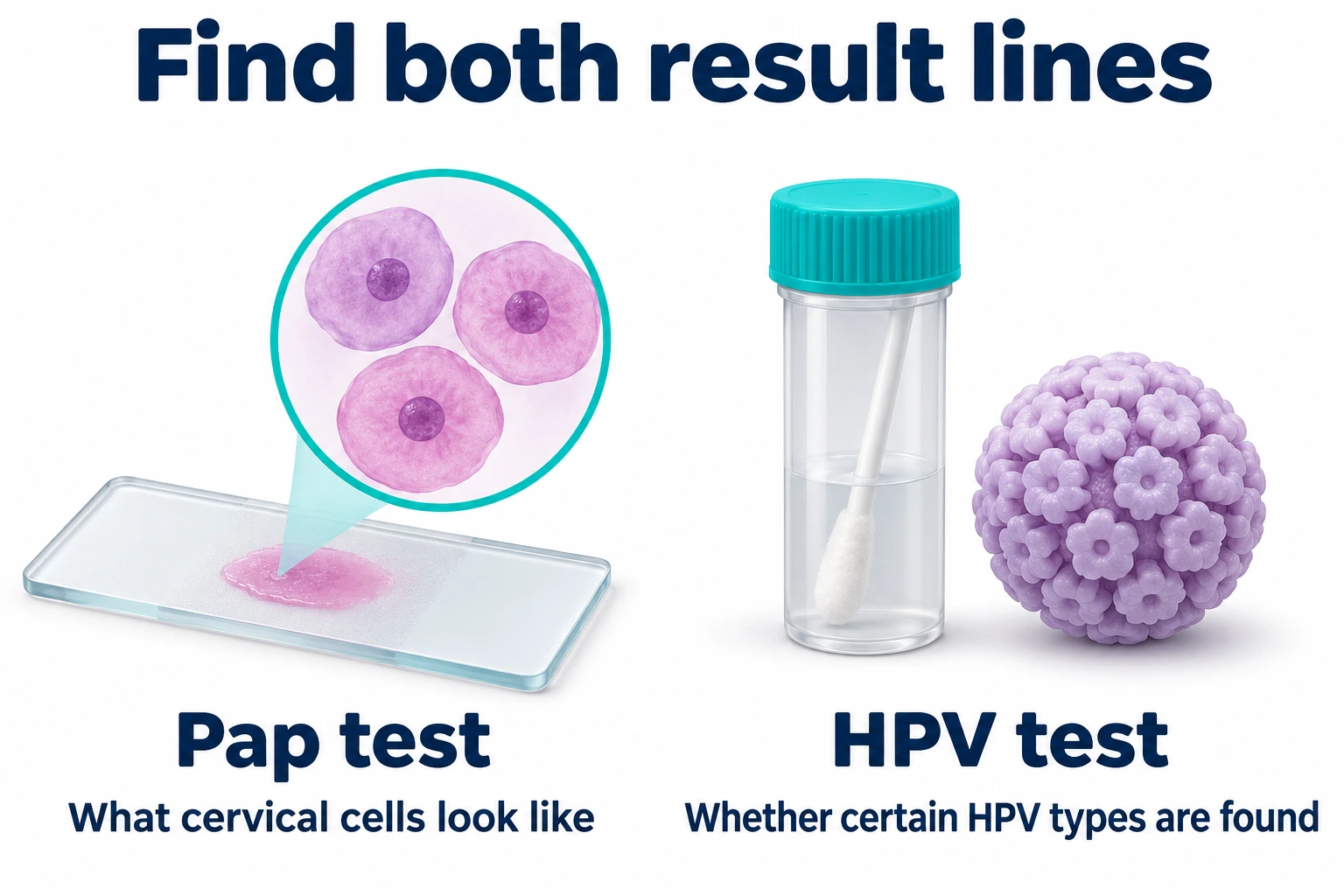
A Pap test examines the appearance of cervical cells. An HPV test looks for types of human papillomavirus linked to cervical cancer. If you had both tests, your report may show two separate results. A positive HPV result can occur even when the Pap result describes normal cells.
If your HPV result is positive and the Pap result is abnormal, copy the exact cell finding as well. Your clinician uses both results and your history to plan follow up.
What if the portal shows only one result?
If one line says “pending,” leave that line open in your notes. For example, write “HPV positive. Pap result pending.” Reading only the HPV line cannot tell you what the cervical cells look like. If the office has already given you an appointment, keep it and ask, “Which results do you have, and who will explain the remaining one?”
ASCUS vs. LSIL and what a higher grade means
Squamous cells line the outer part of the cervix. Labs use different terms to describe how those cells look. Copy the exact words from your report when you call, including any mention of grade.
What does the phrase atypical squamous cells mean?
ASCUS stands for atypical squamous cells of undetermined significance. The cells look a little different and the lab cannot tell exactly why. An HPV result can help the clinician decide what comes next. LSIL describes a recognizable pattern of mild cell changes.
What does LSIL mean on a Pap smear?
LSIL stands for low grade squamous intraepithelial lesion. These mild changes often occur with HPV. The label describes cells from a screening sample.
What does HSIL mean on a Pap smear?
HSIL stands for high grade squamous intraepithelial lesion. It describes changes of greater concern and needs timely follow up. A biopsy can give more information about the tissue itself.
What happens after an abnormal Pap smear?
Your clinician considers the wording, the HPV result if available, your age and your earlier test results. Prior treatment for cervical cell changes also matters. If you changed practices, ask whether your current clinician has those records.
Questions worth writing down
Ask which result determined the recommendation, what the next test or visit will involve and who should arrange it. If the office recommends a colposcopy, it means a clinician will examine the cervix under magnification and may take a small tissue sample. Write down the timeframe your clinician gives you and whom to contact if you have not heard back.
Questions after an abnormal Pap smear
Does an abnormal Pap smear mean cancer?
Most people with an abnormal result do not have cervical cancer. In LSIL and HSIL, the word lesion describes how the cells look. Ask the clinician what follow up your result needs.
What if the report says the sample was unsatisfactory?
That means the lab could not assess the sample well enough. It differs from finding abnormal cells. Contact the ordering office for the repeat testing plan.
Can HPV appear after earlier negative tests?
Yes. An HPV infection can become detectable again after years. A positive result alone cannot tell you when you acquired it.
Should I use the follow up date my friend received?
Ask for the date based on your results and history. Even people with the same Pap label can need different follow up.
What should I send if I have only a portal screenshot?
Include the full result and any HPV line or clinician message. Ask the ordering office to explain an abbreviation if the screenshot cuts it off.
Contact the office that ordered the test to confirm who will arrange your next step.