
 Podiatry
Did a shoe start rubbing against a bump that has been there for months? Or did a toe that felt fine last night wake you with pain? A bunion and a gout flare can both make the joint at the base of the big toe tender and swollen. The timeline often gives the clinician a better starting point than the color of the skin.
How bunion pain changes with shoe pressure
A bunion develops as the big toe shifts toward the smaller toes. The joint at its base sticks out along the inside edge of the foot. The change often takes place over years. You might first notice that a favorite pair of shoes pinches or that the second toe has less room.
The skin over the bump can grow red and sore where it rubs. When you take the shoe off, pressure eases but the shape of the joint remains. Mention whether walking or wearing a particular shoe brings on the pain and whether you have noticed a change in the direction of the toe.
What gout in the big toe joint can feel like
During a gout flare, urate crystals in a joint trigger inflammation. Pain and swelling can build fast, often overnight. Even the touch of a bedsheet may hurt. Flares can settle and leave stretches when the joint feels comfortable.
Other conditions can also cause a painful, swollen toe. Seek medical advice promptly for a first attack. A hot swollen joint with fever, chills or a feeling of being ill needs urgent assessment for possible infection. Tell the clinician about a new episode even if you already have a bunion or a past diagnosis of gout.
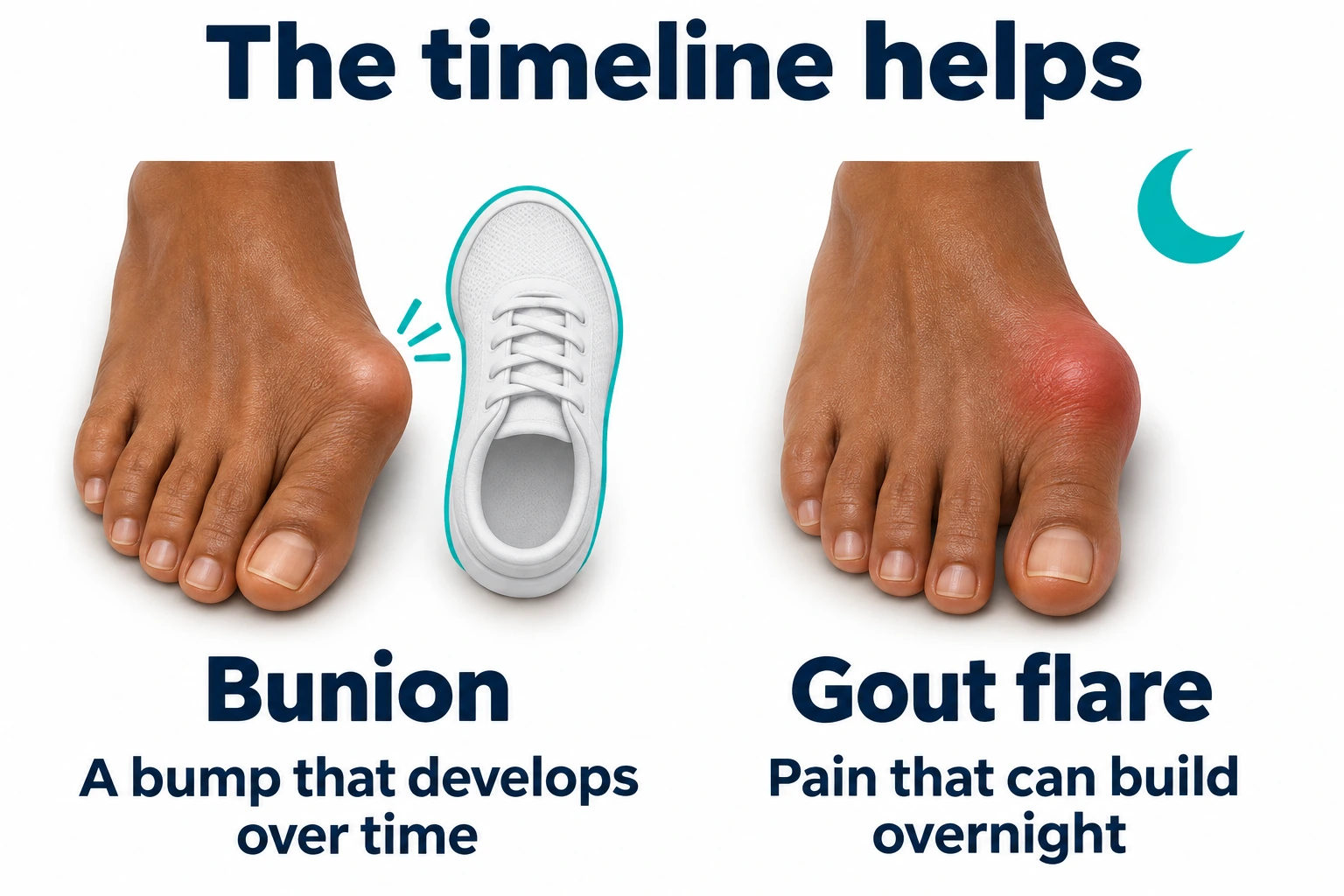
An inflamed bunion vs. gout on examination
Point to the part of the foot that hurts and describe the toe before the pain started. Note how long it took to reach its worst, whether another joint has felt like this and whether you had a fever. Bring a list of medicines and mention any prior gout tests.
To assess a bunion, a clinician can examine the alignment and movement of the toe. An X ray taken while you stand can show how the bones line up. If the question is gout, the clinician may consider a blood test or examine fluid from a swollen joint for crystals. Different questions call for different tests.
Was the blood test during the flare?
Write the blood draw date next to the day your toe became painful. A uric acid level can fall during a gout flare. If the level was low during the attack and your clinician still suspects gout, ask whether to repeat the test at least two weeks after the flare settles. Keep the first result so the clinician can compare the dates. A new hot joint still needs prompt assessment.
Questions about pain at the big toe joint
Can gout look like a bunion?
Yes. An inflamed bunion and a gout flare can both look red and swollen. Did the joint already stick out before the skin changed? Did sudden pain start even when nothing touched the foot? Tell the clinician about both.
Can you have gout and a bunion?
Yes. A bony prominence and a crystal flare have different causes. An old bump alone does not explain a new episode of severe pain.
Does gout always start in the big toe?
The big toe is a common site. Gout can also affect other joints. Mention similar episodes in an ankle, knee or elsewhere.
What if the appointment falls after the pain eases?
Keep a note of when the swelling began, how quickly it peaked and when it eased. Earlier episodes may help your clinician recognize a pattern.
Does a high uric acid result prove the toe pain is gout?
People can have high uric acid without gout. The clinician interprets the result alongside the examination and sometimes a joint fluid test.
If a bump keeps changing how you walk or which shoes fit, ask a foot clinician to examine the joint.
Sources and further reading
- American Academy of Orthopaedic Surgeons guide to bunions (opens in a new tab)
- American College of Rheumatology guide to gout (opens in a new tab)
- NHS guidance on gout and urgent joint symptoms (opens in a new tab)
- Primary care cohort study of foot problems in people with gout (opens in a new tab)
- NICE guidance on measuring serum urate during a suspected gout flare (opens in a new tab)