
 Podiatry
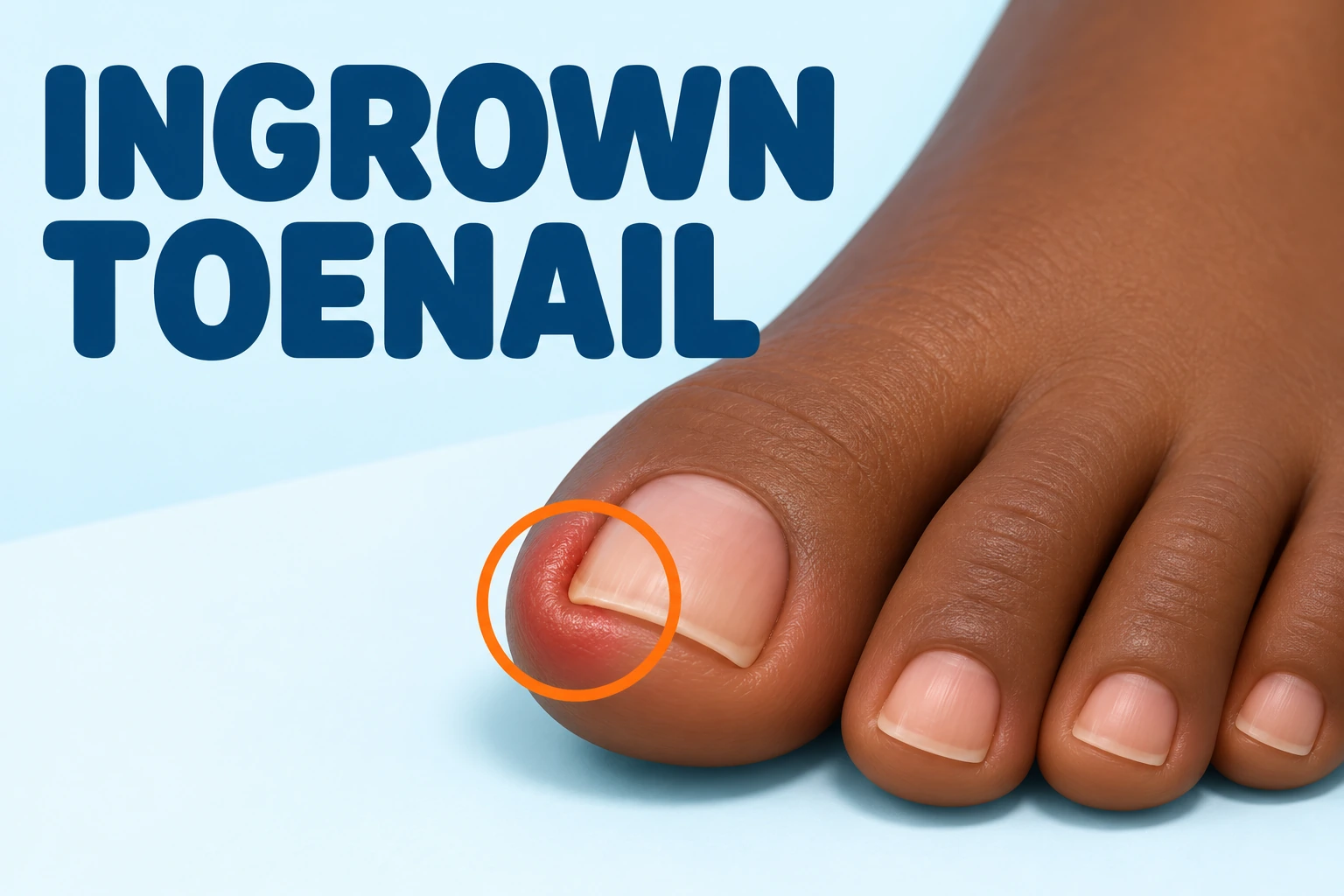
- Increasing pain, severe swelling, or spreading redness around the nail edge.
- Pus or other drainage.
Soreness and swelling at the nail edge can begin with irritation as the nail presses into the skin. Increasing pain, pus, spreading redness, or worsening swelling raises concern for infection.
Why does a toenail become ingrown?
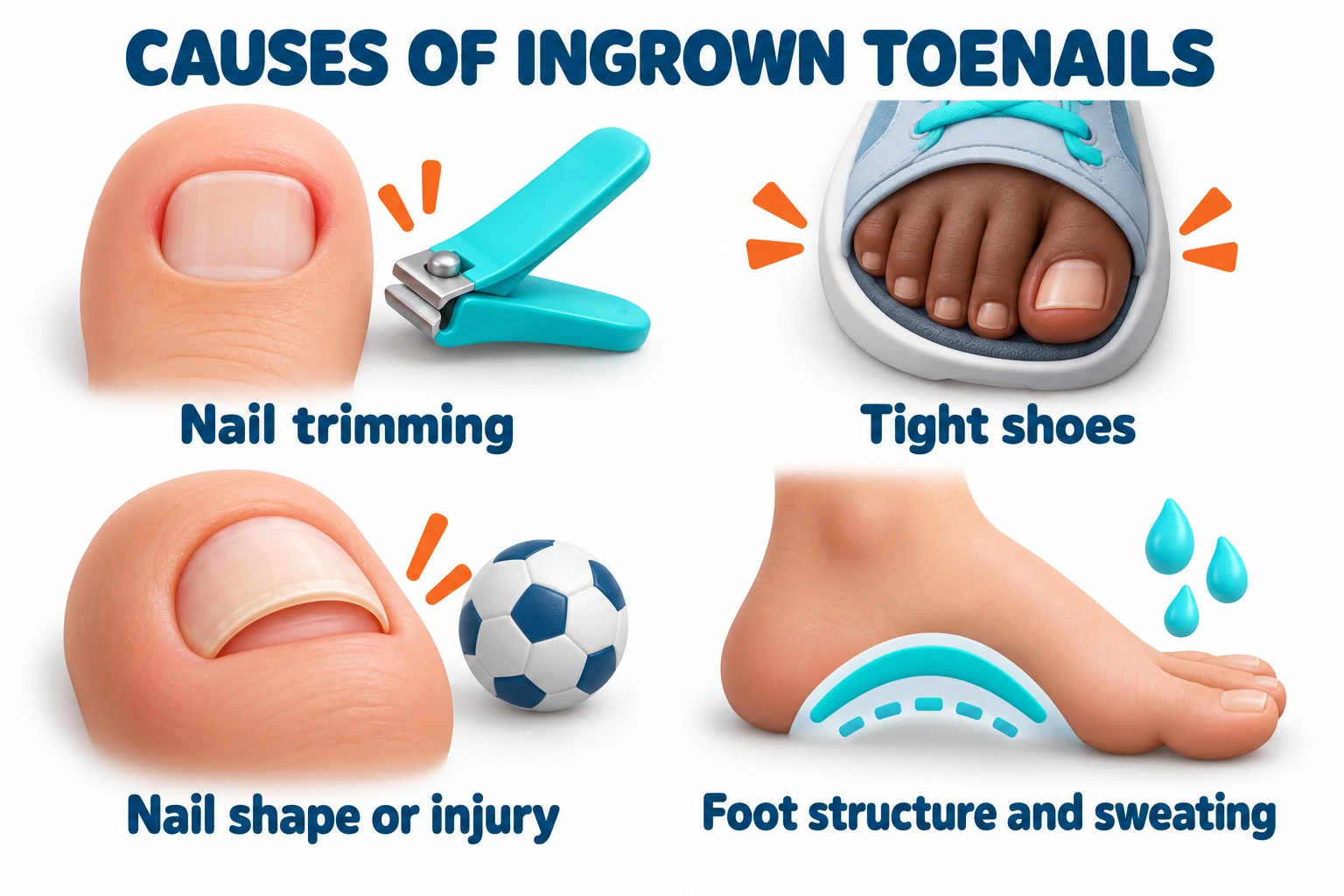
1. Incorrect nail trimming
- Cutting the nails too short or cutting away the corners at the sides. This causes the nail edge to begin growing directly into the soft tissue of the side nail fold.
2. Uncomfortable or tight shoes
- Shoes with a narrow, pointed toe or an incorrect fit constantly press on the toes, especially the big toe, pushing the skin against the nail plate.
3. Anatomical features and injuries
- Nail shape: An excessively flat nail or, conversely, an overly curved, tubular nail can easily dig into the skin.
- Toe injuries: Bruising, impacts, or repeated small injuries, for example during vigorous sports, running, or soccer.
4. Foot anatomy and contributing factors
- Excess body weight or flat feet that increase the load on the front of the foot.
- Excessive foot sweating, or hyperhidrosis, which softens the skin and makes it easier for the nail edge to penetrate it.
Once the edge has grown into the skin, walking and pressure from shoes can repeatedly irritate one small area. The toe may therefore seem better during rest and become painful again after you put on your work shoes.
Irritation or infection? How can you tell?
Irritation versus infection: What is the difference?
- Simple irritation:
- Mild, localized soreness right at the nail edge.
- No pus, severe swelling, or heat.
- Signs of infection that need attention:
- Pus, an unpleasant odor, or recurring drainage.
- Increasing warmth in the toe and worsening pain.
- Inflammation and redness extending beyond the nail edge itself.
Differences across skin tones
- Typical redness may be less noticeable on dark skin.
- Pay attention to warmth, swelling, tenderness, and how much the area differs from the healthy skin around it. Remember that a photograph cannot establish a diagnosis.
Why antibiotics do not solve the problem
The nail edge can act as a foreign body that remains in place. Fragile reddish tissue that bleeds easily sometimes grows around it. This is granulation tissue.
When antibiotics are needed for an ingrown toenail
Spreading infection: Oral antibiotics are prescribed when inflammation and infection extend beyond the local area at the nail edge and involve the surrounding soft tissues.
Antibiotics are not needed for every ingrown toenail. Clinical guidance calls for oral antibiotics in situations such as infection spreading to the surrounding skin, rather than prescribing them automatically.
What you can do without making the problem worse
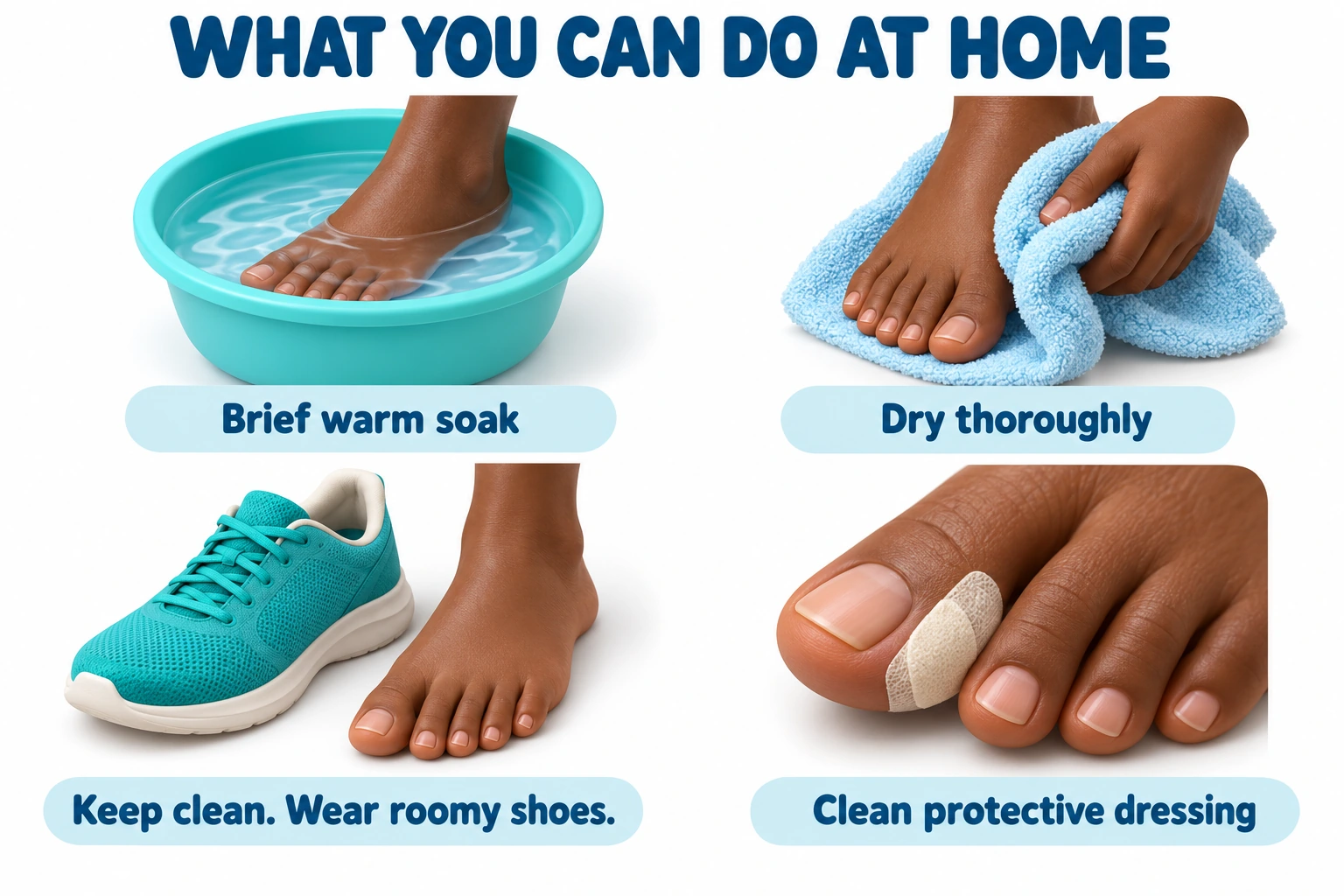
Home care without cutting into the nail
Hygiene and warmth: Briefly soak the foot in warm water to soften the tissues and reduce irritation.
Dryness: Dry the foot thoroughly after soaking. Do not leave the skin damp for a long time.
Comfort: Keep the foot clean and avoid tight shoes to remove pressure from the toe.
Protection: If there is a small amount of drainage, apply a clean protective dressing to reduce friction until your visit.
What is strictly prohibited
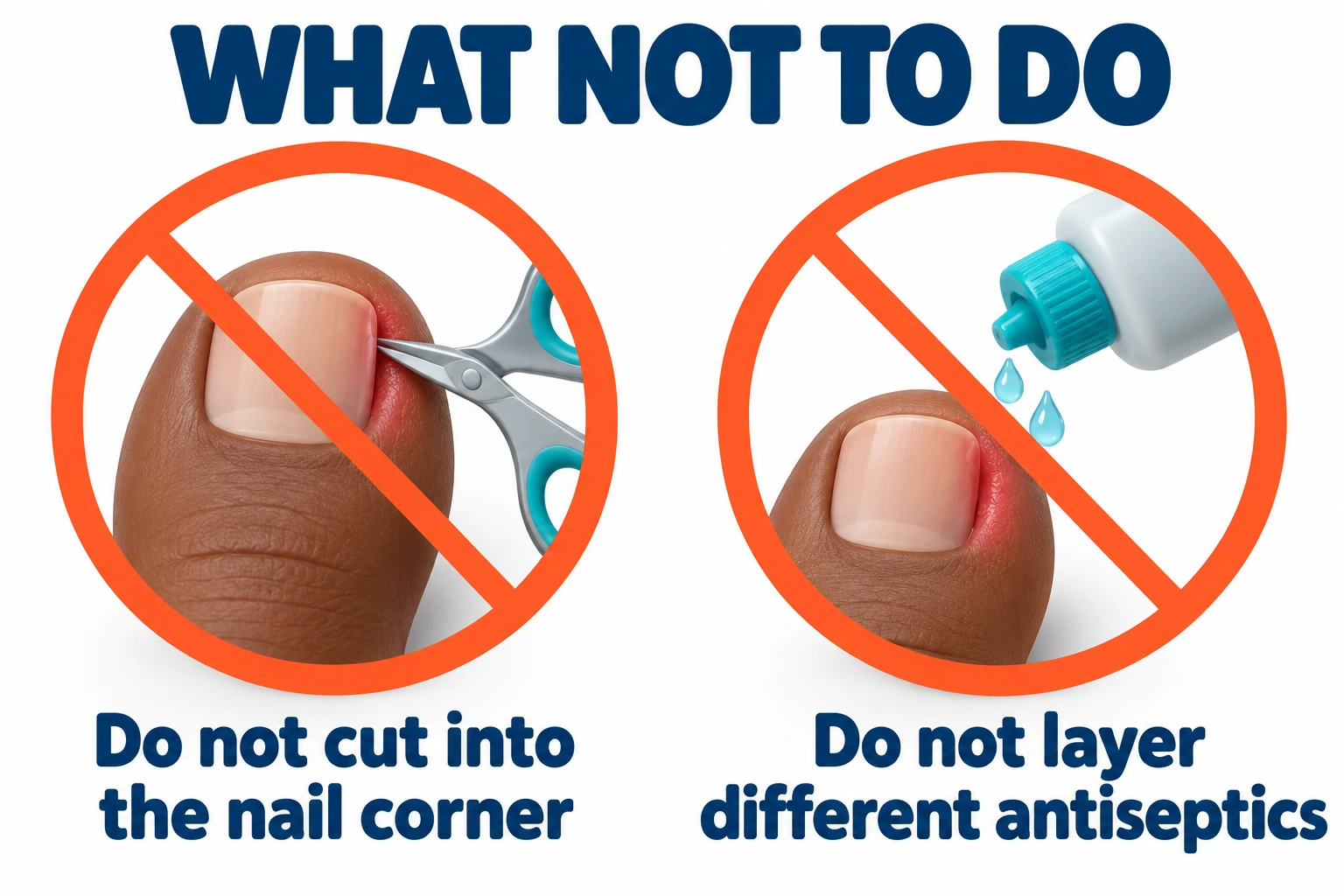
- No surgery at home: Do not try to cut out a deep wedge, dig under the nail edge with scissors, puncture the swelling, or pull out part of the nail. This risks creating new wounds and leaving sharp fragments behind.
- Be careful with chemicals: Do not apply several different antiseptics or nonprescription products to irritated skin one after another.
What a specialist will assess
A podiatrist, a specialist in foot conditions, or another qualified clinician will assess how deeply the nail has grown in, the spread of infection, and circulation and sensation in the toe. Describe previous episodes, attempts to cut the corner, medicines, and conditions that affect healing.
Treatment depends on the severity of the problem. A mild case may not require a procedure. If the nail is deeply ingrown or episodes keep returning, the clinician may discuss removing the affected edge after local anesthesia. Some procedures also treat the area of the nail root from which the troublesome edge grows back.
An ingrown toenail and a fungal nail infection are different problems
An ingrown nail primarily describes the nail edge pressing into the skin. A fungal infection more often changes the nail itself, making it thicker, discolored, or crumbly. These conditions can occur together, and a thick or misshapen nail may be harder to trim safely.
An antifungal product will not fix a painful ingrown corner. A change in color does not automatically mean fungus either.
How to reduce the chance of it happening again
Once the inflammation has settled and your clinician allows regular trimming, cut the nails straight across, without cutting them too short or digging into the sides. Wear shoes with enough room for your toes. If your eyesight, flexibility, or nail thickness makes safe care difficult, ask for help.
Recurring pain at the same edge is worth discussing even if each episode eventually settles. Repeatedly cutting out the corner at home can create a cycle in which the regrowing edge catches on the skin again.
Broader warning signs for people with diabetes are discussed in Health Med's article on diabetic foot care. For the current toe problem, a useful next step is an examination in person and a plan that takes into account why the nail keeps injuring the skin.
Sources
- American Podiatric Medical Association: Ingrown Toenails (opens in a new tab)
- Mayo Clinic: Ingrown Toenail Symptoms and Causes (opens in a new tab)
- ColumbiaDoctors: Ingrown Toenail (opens in a new tab)
- American Family Physician: Ingrown Toenail Management (opens in a new tab)
- NHS: Ingrown Toenail (opens in a new tab)
- American Diabetes Association: Foot Complications (opens in a new tab)
- Mayo Clinic: Nail Fungus Symptoms and Causes (opens in a new tab)