

 Podiatry
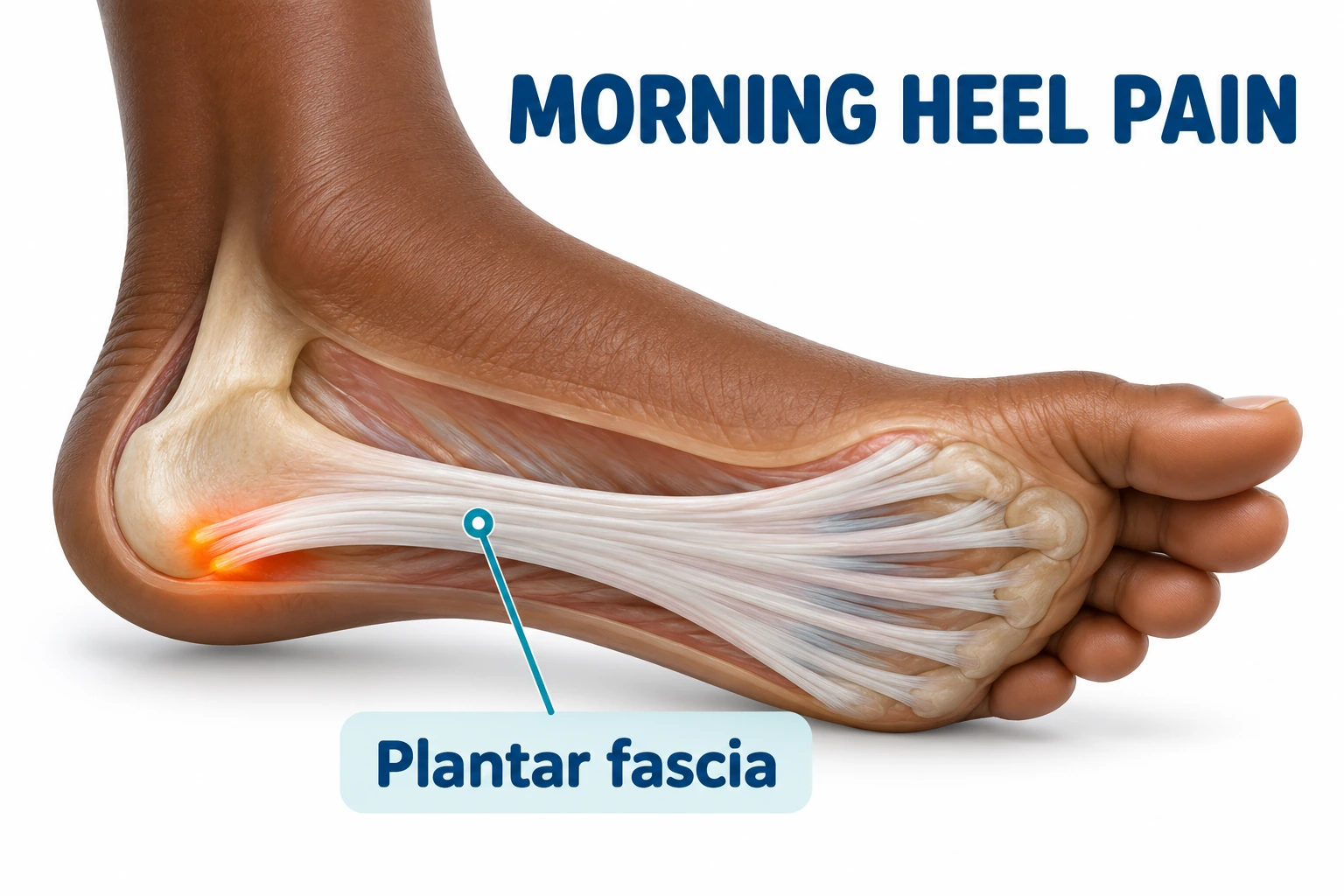
The plantar fascia is a thick, dense band of connective tissue that runs along the entire bottom of the foot, from the heel bone to the bases of the toes.
Key facts
- Function: It acts as a shock absorber and a supporting cable, keeping the arch of the foot in position during walking, running, and jumping.
- Location: Directly beneath the skin on the sole of the foot.
- A common problem, plantar fasciitis: Repeated overload, small injuries, or uncomfortable footwear can cause the fascia to become inflamed and develop tears where it attaches to the heel. This causes sharp heel pain, especially with the first steps in the morning.
Why the first steps can be the most painful
The plantar fascia helps support the arch and distribute the load on the foot. After rest, putting weight on sensitive tissue causes pain near its attachment to the heel. It can feel as though you have stepped on a bruise or felt a stab underneath the heel.
Similar discomfort can occur when you get up after a car ride or working at a desk. Improvement does not mean that the tissue has recovered. Pain can return with prolonged standing, running, or walking.
The term plantar fasciitis is widely used, although some clinicians say plantar fasciopathy because persistent symptoms may involve tissue changes that go beyond inflammation.
The location of pain helps narrow down the causes
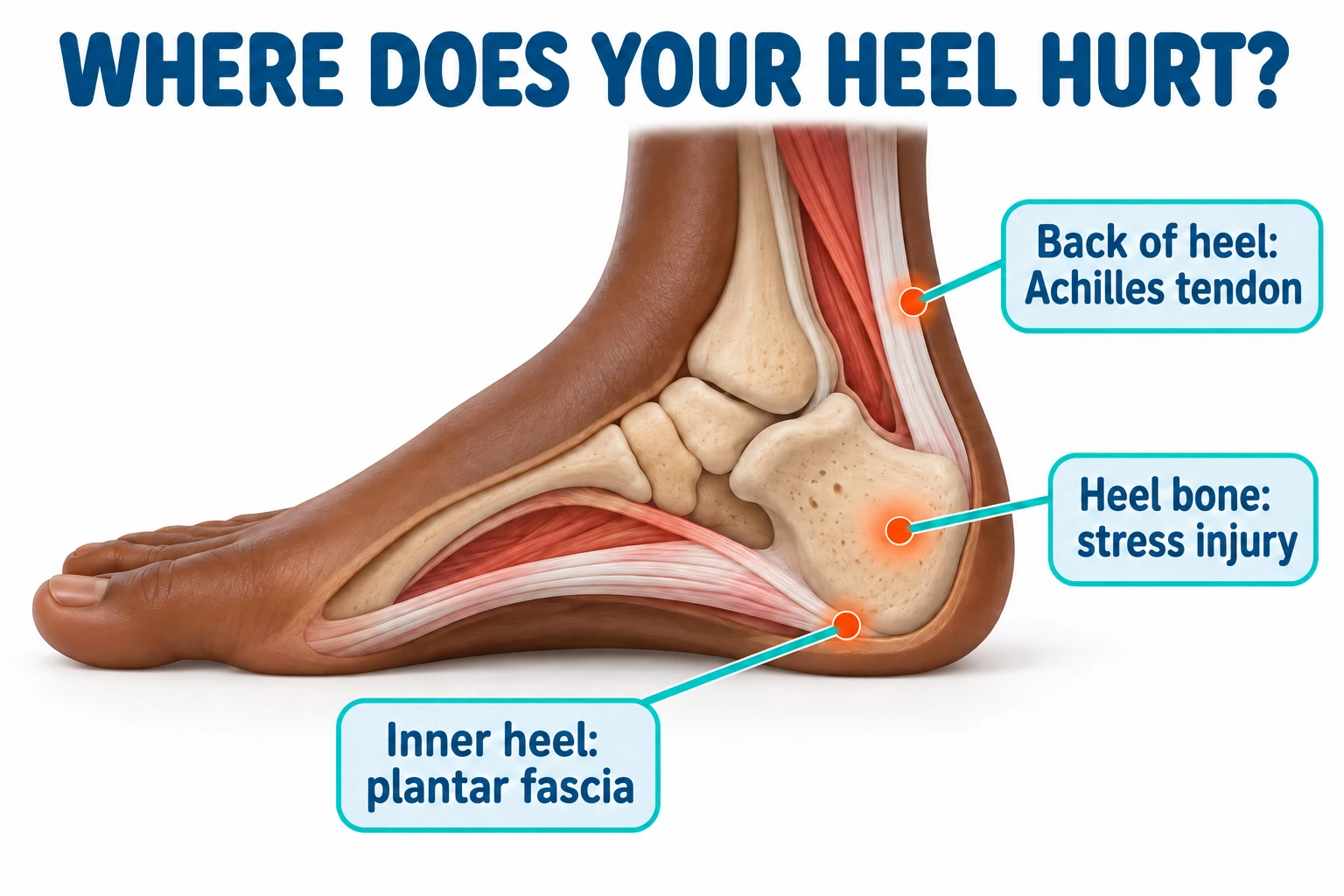
Pain underneath the heel, especially toward its inner edge, often fits a plantar fascia problem. Pain at the back of the heel may involve the Achilles tendon or the nearby bursa. Burning, tingling, or numbness raises the possibility of nerve involvement.
Another possibility is a stress injury to the heel bone, especially after a sudden increase in running, jumping, or time spent on your feet. Unlike typical first step pain, this pain may get worse as activity continues. A significant injury can also cause a fracture or a tendon tear.
These patterns can overlap. Tell your clinician if both heels hurt and you have prolonged morning stiffness or pain in other joints. A broader assessment may be needed than simply choosing different shoes.
A heel spur on an image does not always explain the pain
Hearing about a spur can make it sound as though every painful step must be caused by a sharp bony projection. In fact, heel spurs also occur in people who have no heel pain.
An image needs to be considered alongside the symptoms and examination. For this reason, clinicians do not always order an X ray for typical plantar fascia pain. Imaging can be useful if an injury, an unusual pattern, or another possible diagnosis is suspected. But a more detailed picture of the anatomy does not always identify the source of pain.
What may have changed the load on your foot
Think back to the weeks before the pain began. A new walking habit, extra shifts on a hard floor, different shoes, or a sudden increase in training may have played a part. Sometimes the change seems small: if you started spending long periods barefoot at home after wearing supportive work shoes, the load on your foot may have changed.
Tight calf muscles and the way your foot moves can also play a role. Body weight is only one of many factors, and heel pain should not be reduced to an assessment of weight. A useful examination considers work, activity, footwear, and the examination findings together.
Steps to take while arranging an assessment

1. Reducing strain and staying comfortable
- Limit activity: Reduce the load on your foot, especially impact activities such as running, jumping, and long walks. Do not try to walk through the pain.
- Suitable footwear: Wear comfortable shoes with good arch support. Avoid walking barefoot on hard floors.
2. Cold for pain relief
- How to use it: Apply a cold pack wrapped in a towel for a short time. Do not put ice directly on the skin.
- An important restriction: If you have reduced sensation or circulation problems, consult a clinician before using cold.
3. Stretching and medicines
- Gentle stretching: Gentle stretches for the calf muscles and plantar fascia can help with fasciitis, but they should not cause sharp pain. Do not begin an intensive exercise program before getting an accurate diagnosis. It is better to consult a physical therapist.
- Pain relief: You can choose suitable pain medicines with a clinician or pharmacist, taking your overall health and other medicines into account.
When to seek care sooner
Warning signs with foot pain
After an injury: If you cannot put weight on the foot, heard a crack or pop, or notice a visible deformity, severe swelling, or a large bruise.
Signs of inflammation and infection: A hot, swollen foot, a fever, an open wound, or pain that is getting worse rapidly.
If you have diabetes, poor circulation, or reduced sensation in your feet, any new foot problem calls for prompt medical attention.
- Important: With reduced sensation, even a serious injury, such as a deep wound or deep inflammation, may not cause severe pain.
Sources
- American Academy of Orthopaedic Surgeons: Plantar Fasciitis and Bone Spurs (opens in a new tab)
- NHS Inform: Plantar Heel Pain (opens in a new tab)
- Harvard Health: Heel Pain (opens in a new tab)
- NHS: Heel Pain (opens in a new tab)
- CIO Center: Heel Pain in the Morning (opens in a new tab)
- NIDDK: Diabetes and Foot Problems (opens in a new tab)