
 Podiatry
A hard spot under your foot hurts when you walk. In a photo it looks like a corn. Up close you see a few dark dots and wonder about a plantar wart. Both can sit under thick skin. Where the spot sits and how it has changed can tell a clinician more than a picture alone.
How to tell a wart from a corn
A corn forms where the skin takes repeated pressure or rubbing. Think about where a shoe presses or where the ball of your foot meets the ground. A corn can have a small, firm center made of dense skin. A callus tends to cover a wider area.
A plantar wart is a growth that certain types of human papillomavirus cause on the sole. It can appear away from an obvious pressure point or develop on one. On a spot that bears weight, walking can press the growth inward and leave a layer of hard skin over it.
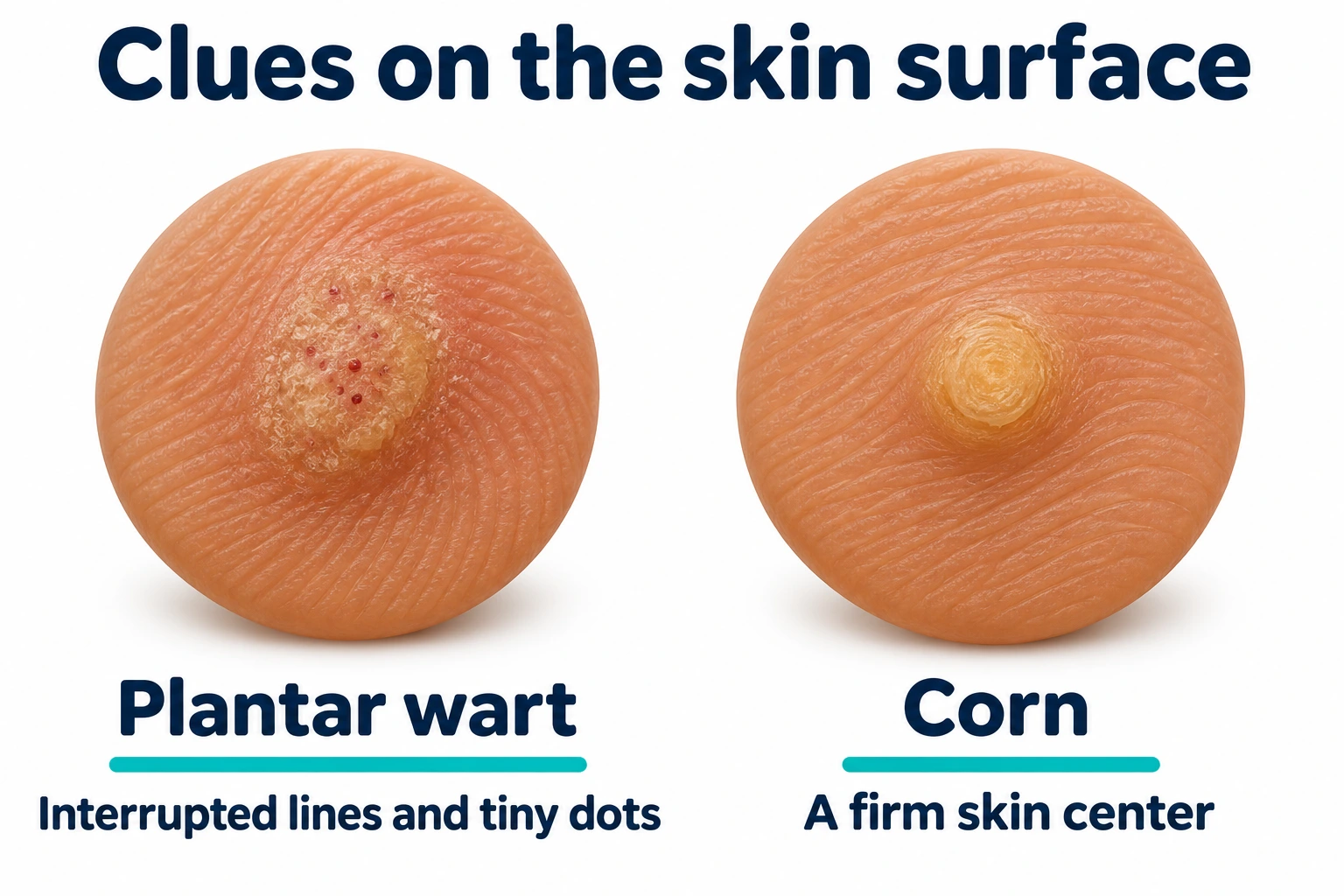
Plantar wart or seed corn? Look at the skin lines and dots
Look at the ridges on the skin around the spot. A wart can interrupt those fine lines. In a corn the lines may continue across the surface. Thick skin can make them hard to see.
Some plantar warts have tiny red or black dots. They come from small blood vessels. A corn can have a central plug of hard skin. You may also hear the term seed corn for a tiny corn that can form on dry skin. A seed corn and the dots in a wart refer to different things. Leave the surface intact so a clinician can examine it.
What to bring to a foot exam
Note when you first felt the spot, which shoes bring on pain and whether the area has grown or developed neighbors. Tell the clinician if the spot bleeds, hurts enough to change your walk or keeps coming back in the same place.
A clinician can look at the lines, blood vessels and skin around the spot. If you have diabetes, poor circulation or reduced feeling in your feet, ask for care before you try a corn pad with acid or a wart product. Those products can injure nearby skin.
Two views to bring to a visit
If you want to show the spot to a clinician, take one picture of the sole so they can locate it. Then take a close view with a ruler beside the spot, leaving the skin uncovered. Check that the markings look sharp before you put your sock back on. If you already used a medicated pad, mention when. A picture from before you applied it can help the clinician see how the surface has changed.
Questions about a wart or a corn
Do corns have black dots?
A cluster of tiny dark dots is more typical of a plantar wart. Black dots alone cannot identify the spot, especially if the surface is hard to see.
Does a corn have a core?
The center consists of compacted skin. Pressure at that point can make a small spot feel quite tender.
How do a plantar wart and a callus look different?
A callus tends to form a broader area of hard skin. A plantar wart can grow beneath it, so a smooth surface in a photo does not settle the question.
Can the number of spots help?
Plantar warts can grow together in a patch. Several areas of thick skin can also reflect several points of pressure. Show the whole area at your visit.
What if I cannot see a bump anywhere else?
A wart can occur alone. A clinician can assess a single painful spot and help you decide how to care for it.
If the spot keeps you from walking in your usual shoes, arrange a foot assessment and describe where the pressure falls.
Sources and further reading
- American Academy of Dermatology guide to the appearance of warts (opens in a new tab)
- DermNet clinical guide to viral warts (opens in a new tab)
- NHS guide to corns and calluses (opens in a new tab)
- American Academy of Orthopaedic Surgeons guide to corns (opens in a new tab)
- Mayo Clinic guidance on corns and calluses (opens in a new tab)
- Bradford District Care NHS guide to foot conditions (opens in a new tab)
- American Academy of Dermatology on photographs for skin assessment (opens in a new tab)