
 Primary care
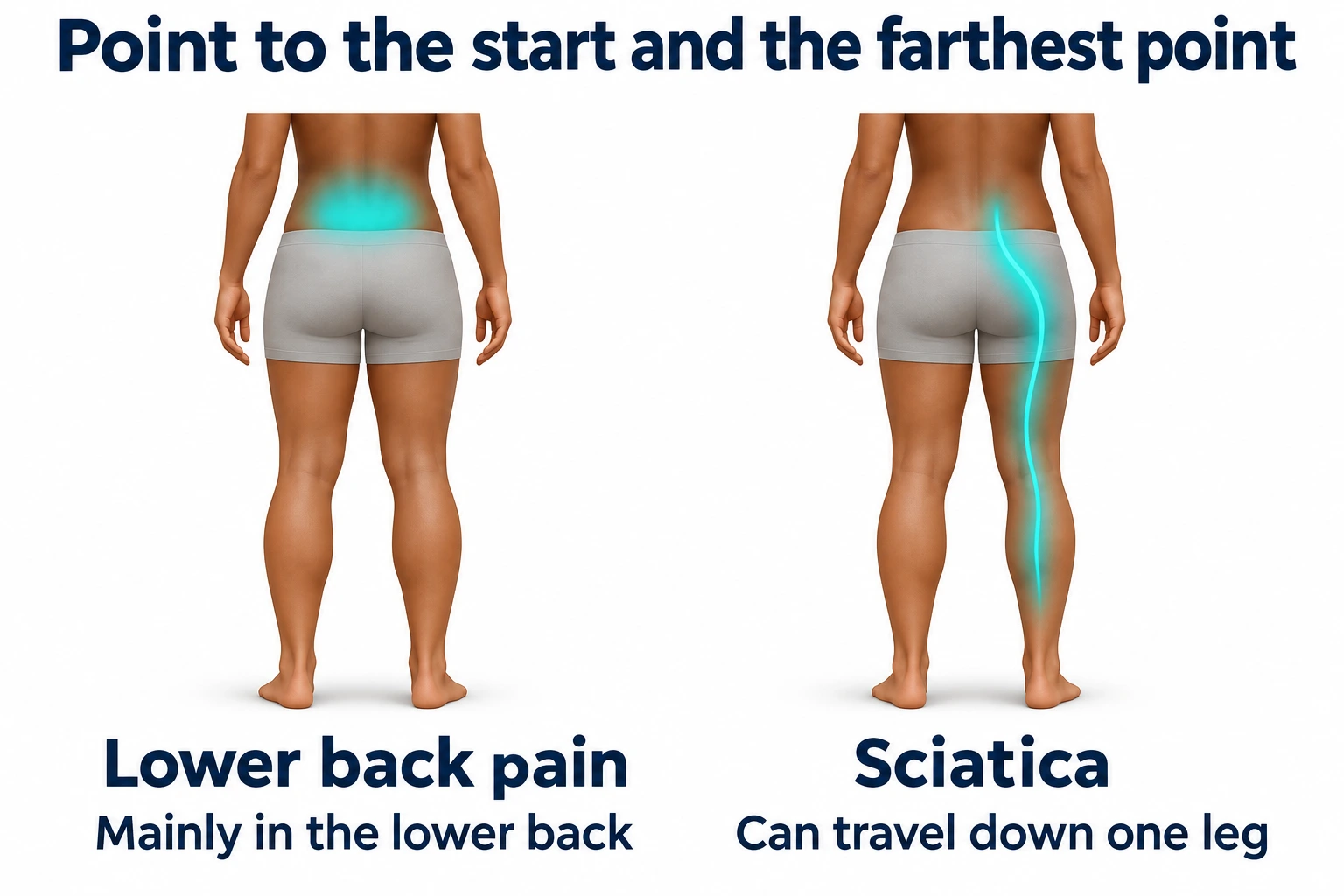
When someone asks where your back hurts, it can help to point twice. First, point to where the pain starts. Then point to the farthest place you feel it. An ache across the belt line and a burning line from the buttock into the foot give a clinician different clues.
What is the difference between sciatica and lower back pain?
Localized lower back pain stays mainly in the lower back. Sciatica describes symptoms related to irritation or pressure on nerves that supply the leg. The leg pain often runs from the buttock down the back of one leg. It can reach the calf, foot or toes. Sometimes the back barely hurts.
What to describe besides pain
Tingling, an area that feels numb or trouble using the leg can accompany sciatica. For example, tell the clinician if you have started catching your toes when you walk. Say whether the foot feels weak or whether stepping hurts. Those are different observations.
Signs that need emergency assessment
Get emergency care now if you develop numbness around the genitals or anus, new trouble starting urination, inability to pass urine, or new loss of bladder or bowel control with back or leg symptoms. Seek emergency care if new shooting pain travels down both legs, or you develop severe or worsening weakness or numbness in both legs. Call 911 if you cannot travel safely.
A change in one leg also matters
Seek prompt medical attention for new or increasing weakness in one leg or foot. You do not have to wait for the pain to grow stronger before mentioning a change in what your leg can do.
Make a short map of the symptoms
Sketch or describe one line for the pain and a separate area for numb skin. Add the side, when it began and whether it comes and goes. If the furthest point changes, mention both locations. A drawing can be easier to share than trying to remember the names of muscles.
Bring one example from the day
Does a cough send pain farther down the leg? Can you sit through your usual commute, or does the pain make you stand up earlier? Stick with changes you have already noticed. You do not need to bring on symptoms to demonstrate them.
When sitting feels better than standing
Compare two activities you already did on the same day. For example, “I sat through breakfast without leg pain. By the time I reached the bus stop, the outside of my calf was burning. Sitting on the bus eased it.” Include the activity that felt easier as well as the one you had to stop. If your experience is the reverse, describe that. One position alone cannot identify the cause, and there is no need to repeat a painful activity to make a record.
Questions about back pain and sciatica
Can you have sciatica without back pain?
Yes. Leg symptoms can dominate. Tell the clinician about a burning or shooting path down a leg even if your back feels comfortable.
Does pain need to reach the toes?
No. Describe the farthest point you actually feel it. People experience different patterns, and the endpoint alone cannot establish the cause.
How can I tell if back pain is sciatica?
Pain that stays in the lower back is less typical of sciatica. Mention stiffness, limits on daily tasks or changes in where you feel the pain.
What if the direction changes over the day?
Note where you felt it at first and where it traveled later. Mention new numbness or weakness as a separate change.
When should I arrange a visit for symptoms that persist?
Contact a clinician if pain keeps getting worse, disrupts usual activities or fails to improve over a few weeks. Seek help sooner for new weakness or any emergency sign above.
Bring your symptom map to the visit and say what you can no longer do as usual.