
 Urology
Think about the last time you leaked urine. Did a cough come first? Did you feel a sudden need to go and leak on the way to the bathroom? The order helps a clinician tell the difference between stress and urge incontinence. Both types of urinary incontinence can affect the same person.
When pressure comes first
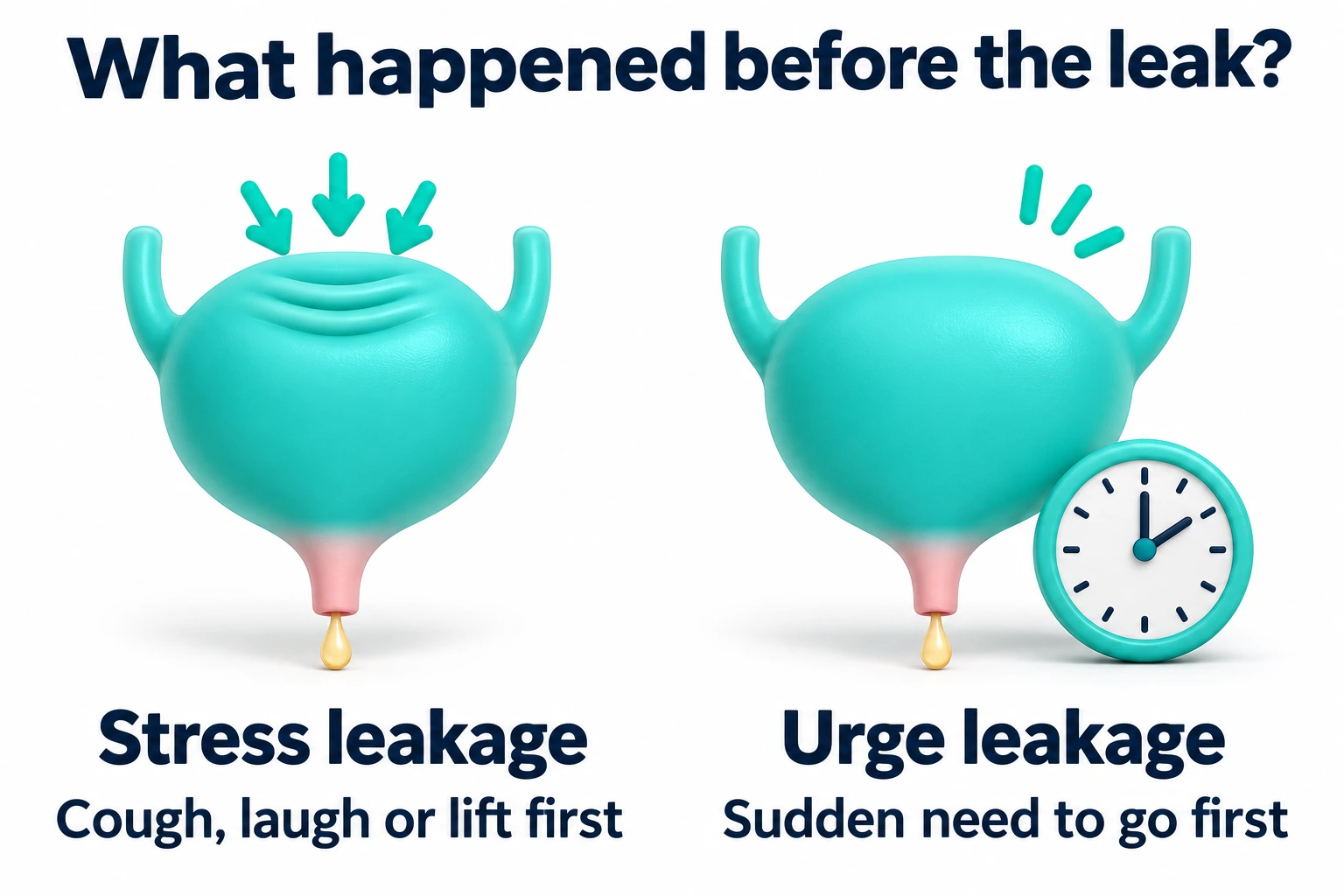
A sneeze, laugh, lift or jump increases pressure on your bladder. Urine leakage when laughing is one example. If urine escapes at that moment, the episode fits a stress pattern. Here the word stress refers to physical pressure. Someone might describe a few drops when a coughing spell begins, with no feeling beforehand that they needed the bathroom.
You do not need to repeat the movement to prove that it happens. Think back to an ordinary episode. Did the first cough cause the leak, or had you felt a strong urge before you began to cough? Those details tell the clinician more than the word accident.
When the need to go comes first
A sudden urge to pee and leaking before you reach the toilet fit a pattern called urge incontinence. The warning can be brief. If you felt the urge while sitting and leaked after you stood to walk to the bathroom, say that the urge started while you were still seated.
Urgency can also happen without a leak. In a diary, keep those episodes distinct. The clinician can see when you felt pressed for time and when you actually lost urine.
When both patterns occur
One person can have leaks with a laugh on one occasion and leaks after a sudden urge on another. Clinicians call that combination mixed urinary incontinence. If neither label seems to fit every episode, describe two examples instead of choosing one label for the whole week.
Mention which pattern disrupts your day most. A small leak during a favorite activity may bother you more than a larger one at home. That detail helps the clinician understand what you want to address.
Make a bladder diary you can use at your visit
A diary over two or three days can show details that are hard to recall a week later. For each entry, record the time, drinks and amounts, trips to the toilet and any leaks. Include how much you passed if your clinician asks you to measure it.
For a leak, add the activity and whether you felt an urge first. An entry such as “At noon I laughed and leaked a little, with no urge” describes a pressure pattern. For an urge episode, note what happened between feeling the need to go and reaching the toilet.
What if the urge starts at your front door?
If the urge hits when you unlock your front door, put that moment in the diary. Record when you first felt it, whether any urine escaped and where you were when it did. An entry can be as short as “Felt the urge at the front door, reached the toilet dry.” That is useful even when you have no wet clothes or pad to show for it.
Questions about bladder leakage
Why do I leak urine when I cough or sneeze?
A brief rise in pressure can cause a leak. If you notice leaking urine when sneezing or coughing, mention whether you felt any urge before it happened.
Does a sudden urge always mean urge incontinence?
Urge incontinence includes leakage. If you make it to the toilet without leaking, describe that episode as urgency.
Can men have stress leakage too?
Yes. Stress leakage can affect men as well as women. Tell your clinician about any prior pelvic or prostate surgery.
What if I cannot remember which came first?
Say that the sequence is unclear. Record the next ordinary episode when you can. You can still discuss the problem without a complete diary.
What might the clinician ask me to do?
Expect questions about your health and the timing of the leaks. During an exam, the clinician may ask you to cough with a full bladder to see whether urine escapes.
Bring the diary or describe the last two leaks at your urology visit. Start with what happened just before each one.