

 Urology
A urinary tract infection can start with a sudden urge to urinate, burning or discomfort in the lower abdomen. You may keep going to the bathroom but pass only a small amount of urine each time. These symptoms need attention, even if they seem familiar from a previous infection.
The first priority is to understand whether the symptoms suggest a problem limited to the bladder or point to a more serious illness. Fever, chills, back or side pain and vomiting can be signs of a kidney infection.
Early signs you may notice
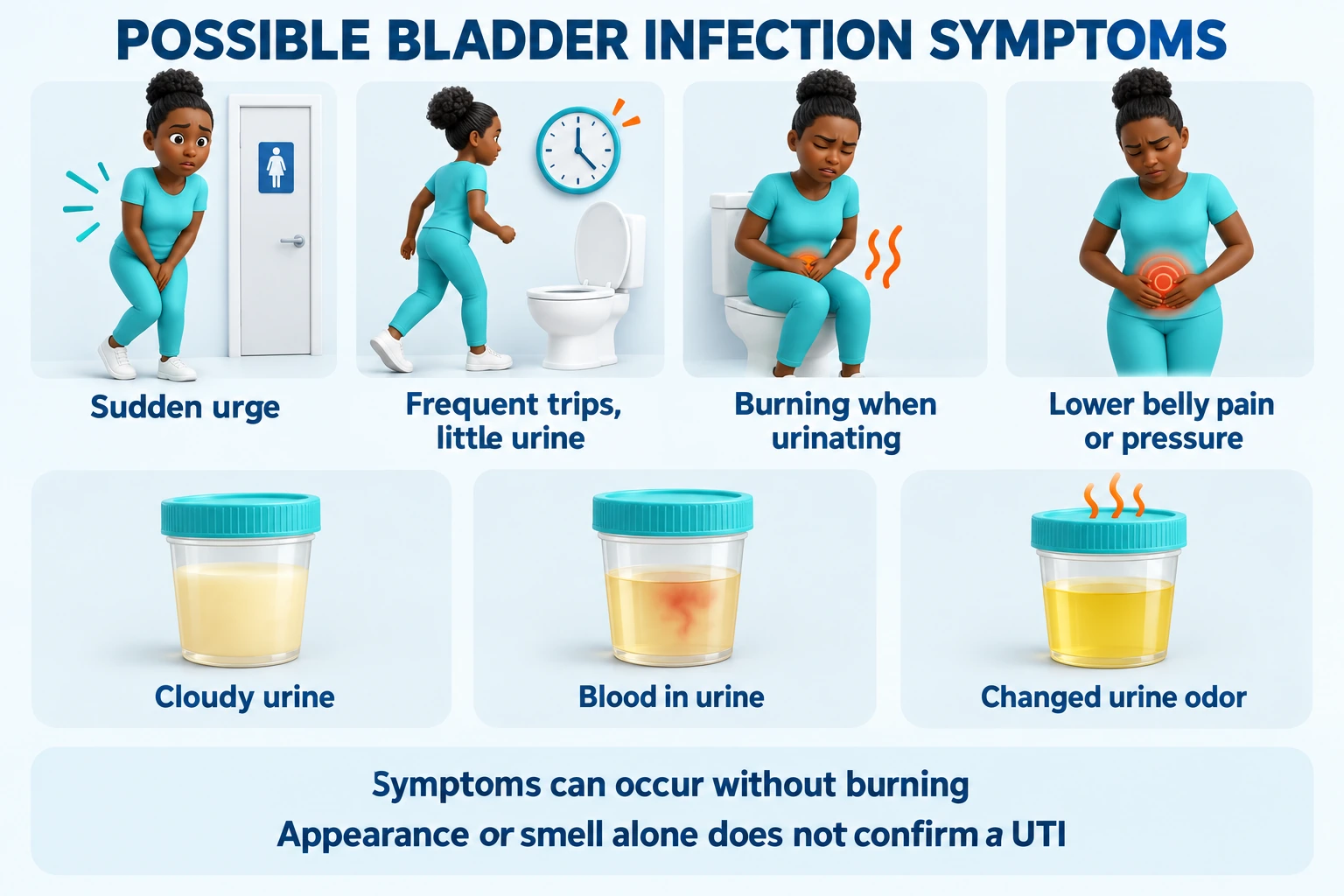
A bladder infection is the most common type of urinary tract infection. The first change may be a persistent urge that returns soon after you empty your bladder. You may feel burning when you urinate, along with soreness or pressure in the lower abdomen.
Urine may become cloudy or contain blood. Its smell may also change. However, appearance or smell alone is not enough for a diagnosis. The combination of symptoms, your health circumstances and, in some cases, a urine test provides more information than any single sign.
A urinary tract infection can occur without burning. Some people mainly notice sudden or frequent urges and discomfort. On the other hand, burning does not always mean a urinary tract infection. Irritation, vaginal conditions and sexually transmitted infections can cause similar sensations.
If you notice blood in your urine, tell your doctor. Do not assume it is harmless just because you have had a bladder infection before, especially if the blood remains after treatment.
Symptoms in women and men
The main symptoms are largely the same. Urinary tract infections are more common in women, partly because the urethra is shorter and bacteria have less distance to travel to reach the bladder. Sexual activity, changes during menopause and some forms of contraception can affect the risk.
In men, burning, sudden urges and frequent urination also need evaluation. The doctor may assess whether the problem is related to incomplete bladder emptying, an enlarged prostate or prostatitis. A weak stream and pelvic discomfort are useful to mention, but they do not establish the cause by themselves.
If you are pregnant or pregnancy is possible, contact your medical team promptly about urinary symptoms. Pregnancy changes how an infection is evaluated and treated. Also mention a catheter, a recent urologic procedure, kidney disease or a weakened immune system. These circumstances can change the next steps.
When the problem may extend beyond the bladder
An uncomplicated bladder infection usually causes urinary symptoms without making you severely unwell overall. Fever or chills, pain higher in the back or along one side, nausea and vomiting raise concern that the kidneys may be involved.
How urgently to seek care for a urinary tract infection
1. When emergency care is needed on the same day:
- Dangerous symptoms: Being unable to keep fluids down because of vomiting, fainting, confusion, sudden severe pain, shortness of breath or a rapid deterioration in your condition.
- Urinary retention: Difficulty urinating or being unable to urinate despite a strong urge.
2. Considerations in older adults:
- Sudden confusion or delirium: A reason for urgent evaluation, but NOT automatic proof of a urinary tract infection.
- The diagnostic rule: Bacteria in the urine without symptoms are common in older adults and do not always require antibiotics. The doctor must look for the actual cause of the deterioration.
A positive urine culture does not always mean an infection needs treatment
Bacteria in the urine without symptoms
1. Asymptomatic bacteriuria:
- Definition: Bacteria in the urine without any symptoms of infection, such as burning, frequent urges or pain.
- The main treatment rule for most people: Adults who are not pregnant do not need antibiotics. Treatment in this situation is ineffective, causes side effects and leads to bacteria becoming resistant to medicines.
2. Exceptions when treatment is required:
- Pregnancy.
- Upcoming urologic surgery or invasive procedures.
A test result needs to be considered together with the clinical picture. “Bacteria were found” and “the cause of today’s symptoms was found” are not equivalent conclusions.
How the diagnosis is made
The doctor will ask when the symptoms began, whether you have a fever or side pain, whether you have had infections before and whether you have recently taken antibiotics. A urine sample may be checked for signs of inflammation and infection. A culture helps identify the bacteria and, when needed, choose an antibiotic.
Follow the sample collection instructions carefully. If you have already taken an antibiotic, including a tablet left over from a previous course of treatment, say so. This can affect how the results are interpreted.
If you have symptoms but the test is negative, seek care again if the symptoms persist. An initial negative result does not, by itself, explain the discomfort. Depending on the situation, the doctor may repeat the test, order a culture or look for another cause, rather than prescribing antibiotics repeatedly without a clear reason.
Urinary and vaginal symptoms can overlap
A yeast infection often causes significant itching or irritation around the vagina, sometimes with thick discharge. Urine touching irritated skin can sting, which may feel like burning during urination. Other vaginal infections and some sexually transmitted infections can also cause discomfort.
Tell your doctor about discharge, itching, sores, pain during sex or possible exposure to a sexually transmitted infection. This helps determine which samples are needed for testing. A urine test for a bladder infection is not a complete check for every cause of symptoms in the genital area.
Can the infection go away on its own?
Some mild infections may improve without antibiotics, but you cannot reliably tell at home which symptoms will resolve safely. See a doctor for an evaluation and a treatment plan. Do not delay care if you are getting worse, and do not use someone else’s prescription or leftover antibiotics.
Drinking enough to avoid dehydration may help you feel better. Follow any prescribed fluid restriction, however. Cranberry products and medicines for painful urination do not replace treatment for a confirmed infection. If medicine is prescribed, take it as directed and ask when improvement should begin and what to do if it does not.
Before your appointment, prepare a short timeline: when the symptoms began, your temperature if you measured it, where the pain is, whether you saw blood and what you have already taken. This gives the doctor a clearer starting point than simply saying, “I think I have another infection.”
Sources
- NIDDK: Symptoms and Causes of Bladder Infection in Adults (opens in a new tab)
- NIDDK: Diagnosis of Bladder Infection in Adults (opens in a new tab)
- NIDDK: Treatment for Bladder Infection in Adults (opens in a new tab)
- IDSA: Guideline for Asymptomatic Bacteriuria (opens in a new tab)
- UChicago Medicine: What You Should Know About Urinary Tract Infections (opens in a new tab)
- Office on Women’s Health: Vaginal Yeast Infections (opens in a new tab)
- ACOG: Urinary Tract Infections (opens in a new tab)