

 Ultrasound
Can I eat before an ultrasound?
Do not eat for 8 hours before the procedure.
If you accidentally eat or drink something against the instructions, call the center and explain exactly what you had and when. The staff will decide whether the exam can go ahead, whether the time should change or whether your appointment needs to be rescheduled.

Can I drink water?
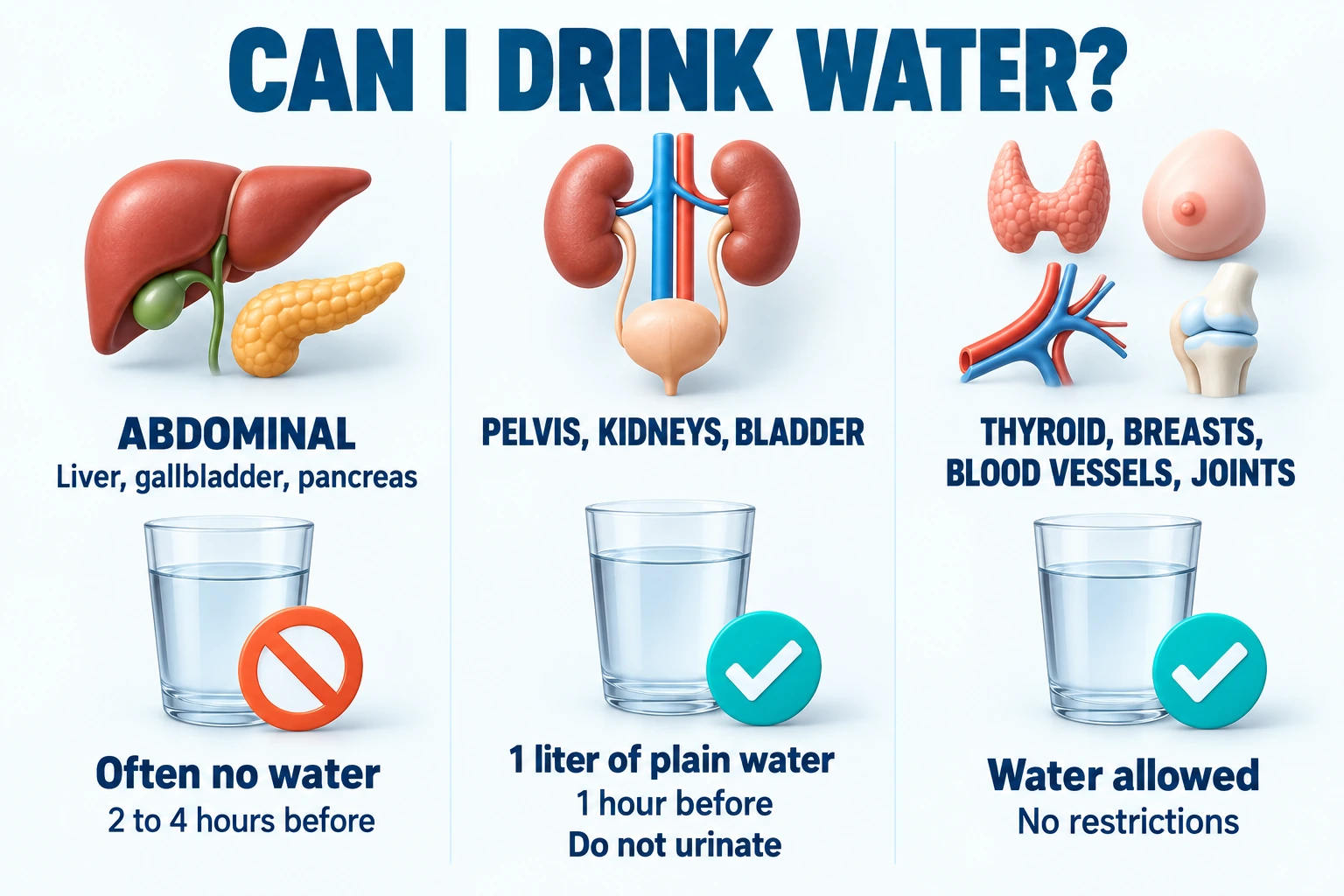
Ultrasound of the abdominal organs, including the liver, gallbladder and pancreas: You are often advised to avoid water for 2 to 4 hours before the procedure as well, so that your stomach is completely empty.
Ultrasound of the pelvis, kidneys and bladder:
Drinking water is required. One hour before the exam, drink 1 liter, about 32 ounces, of plain water and do not urinate, so that your bladder fills.
Ultrasound of the thyroid, breasts, blood vessels and joints:
There are no restrictions on fluid intake. You may drink water without restriction.
What to bring to your ultrasound and what the process involves
- Wear clothing that makes it easy to expose your abdomen. That is all. You do not need to bring anything else.
How long does it take?
The ultrasound takes 30 minutes or less.
What the exam can show
An abdominal ultrasound uses sound waves to create images of internal organs, such as the liver, gallbladder, kidneys, pancreas and spleen.
Ultrasound does not use ionizing radiation, which is used in radiography and computed tomography. The specialist moves a small probe over your skin. Gel helps sound waves pass between the probe and your body.
A referral for an ultrasound does not mean there is a problem. It is a way to check whether an organ is healthy. Ultrasound helps narrow down the possible causes.
Is ultrasound harmful?
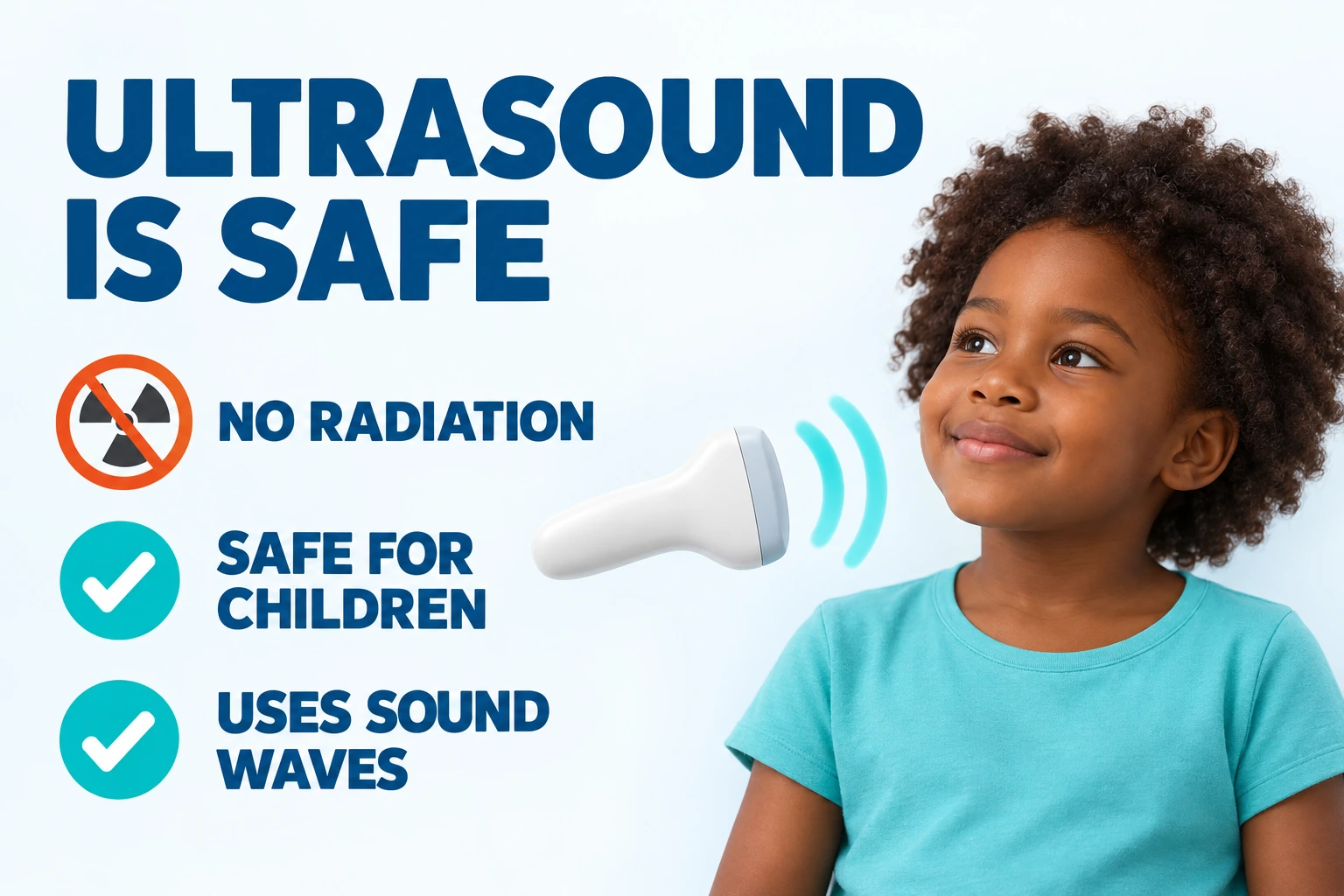
No, ultrasound is not harmful. It is one of the safest diagnostic examinations in modern medicine.
No radiation: Unlike radiography or CT, ultrasound uses high frequency sound waves rather than ionizing radiation.
Safety during pregnancy and for children: Research and many years of medical practice, including FDA and WHO standards, confirm that diagnostic ultrasound is safe for the fetus and for children of all ages.
The ALARA standard: Doctors follow the principle of minimizing exposure. The procedure lasts only as long as needed to obtain a clear image.
Why fasting instructions vary
Food and gas in the bowel can affect image quality.
For an abdominal ultrasound at medical centers in New York, the standard fasting protocol is 8 hours, within a range of 6 to 8 hours.
Medicines and diabetes require a separate plan
Do not stop taking a prescribed medicine just because the instructions say to fast.
Your health and stable blood sugar always take priority over the ultrasound schedule. If blood sugar drops sharply, the patient must break the fast, take glucose or have a snack, and notify the medical team.
How to read an ultrasound report
Ultrasound does not travel well through air and gas. The report may therefore say that part of an organ is “obscured by bowel gas” or “not well visualized.” This wording describes a limited view. By itself, it does not mean that a disease has been found in the organ.
It also does not prove that the area that could not be seen is healthy. The doctor needs to assess whether the exam answered the original question and whether further testing is needed. Understanding this distinction can prevent unnecessary worry if the report appears in your patient portal before someone has had a chance to explain it.
Sources
- RadiologyInfo from the ACR and RSNA: Abdominal Ultrasound (opens in a new tab)
- Johns Hopkins Medicine: Abdominal Ultrasound (opens in a new tab)
- MedlinePlus: Abdominal Ultrasound (opens in a new tab)
- RadiologyInfo: How to Prepare for Your Ultrasound Exam (opens in a new tab)
- Vanderbilt University Medical Center: Prepare a Patient for an Exam (opens in a new tab)
- University Hospitals Sussex: General Ultrasound (opens in a new tab)