
 Urology
You notice pink in the toilet. Nothing burns, and the next time you go, your urine looks clear. Call a health professional today if you see blood in your urine, even if it happens once. The medical term for this symptom is painless hematuria. A trace on a routine lab report raises a different question. Start by finding out what the test measured.
What did you see?
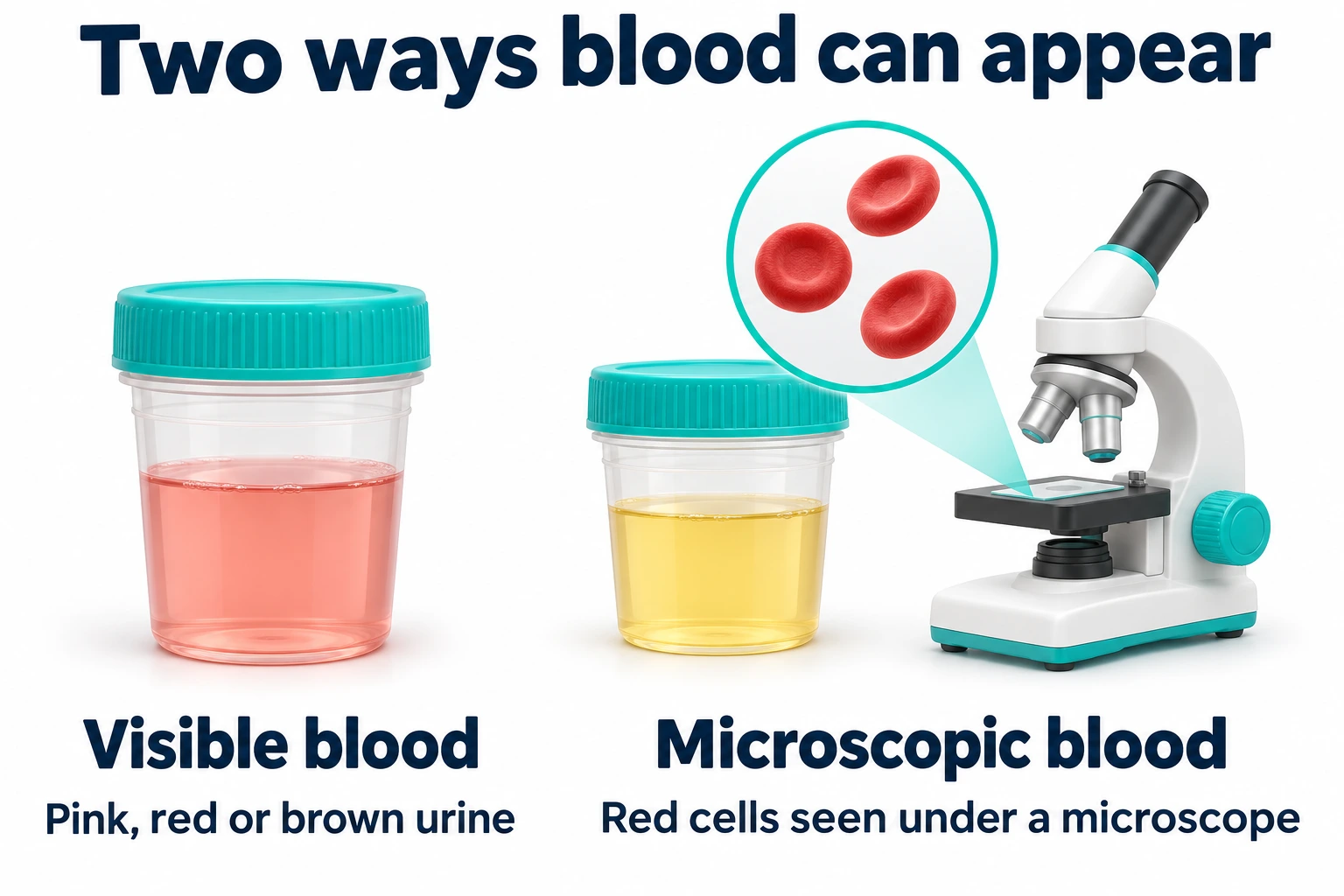
Visible blood can turn urine pink, red or brown. A small amount can change the color. Write down when you first saw it, whether it happened again and whether you noticed clots. If you suddenly cannot pass urine, seek emergency care now. A clot can block the flow.
Foods such as beets and some medicines can also color urine. In women, menstrual or vaginal bleeding may reach the toilet or a urine sample. Mention whether you saw blood while passing urine, on the tissue afterward or both. If you cannot tell where the color came from, tell the clinician exactly what you saw.
What to say if the next trip looks normal
When you call, describe where you first saw the color. Was the urine pink from the start, did a few red drops appear at the end, or did you see red throughout? If you only noticed it in the bowl afterward, say so. You can give that account today without waiting for another episode. The clinician can use that detail alongside the rest of your history.
Microscopic vs. gross hematuria on a lab report
Clinicians call blood you can see gross hematuria. A urine dipstick uses a chemical reaction to screen for blood. If it shows a positive result, a clinician may ask the lab to examine the sample under a microscope. That step checks whether red blood cells are present. When the cells show up under the microscope but the urine looks normal, clinicians call it microscopic hematuria.
Bring the report or open it on your phone. If the sample coincided with a period, ask whether to repeat it after the bleeding stops. Mention any earlier test that showed blood, even if you felt well at the time.
What are some causes of blood in urine without pain?
Bleeding can start in the kidneys, bladder or other parts of the urinary tract. Kidney disease, infection, a stone and tumors are among the possible causes. Color alone cannot tell which part is involved. Your age, smoking history and other findings help guide the evaluation.
Bring a list of medicines, including aspirin and blood thinners. Mention recent strenuous exercise, an injury or a urinary procedure. For some people the next step is a repeat urine test. Others may need blood tests, imaging or a look inside the bladder with a thin scope. Ask what question each proposed test would answer.
Questions about painless blood in urine
Can blood in urine come and go?
Yes. Tell the clinician about the first episode even if you have passed clear urine since then.
What if I notice blood in urine without pain or burning?
Blood can be the only change you notice. When you call, say whether you saw it yourself or learned about it from a test.
Can I tell if the blood came from my prostate?
In men, the prostate is one possible source of painless blood in the urine. You cannot tell by the color alone. Tell your clinician about changes in urination and any prior prostate problems.
Does taking a blood thinner explain the result?
A blood thinner can make bleeding more noticeable. Tell the prescriber and ask about evaluation. Get medical advice before changing the dose.
What should I ask after the first test?
Ask who will review the result, how you will hear back and what to do if the urine changes color again before then.
If your clinician recommends urology follow up, bring the urine report and describe the episode in your own words.
Sources and further reading
- NIDDK guide to hematuria (opens in a new tab)
- American Urological Association guideline on microscopic hematuria (opens in a new tab)
- NHS guidance on visible blood in urine (opens in a new tab)
- NIDDK symptoms of urinary retention (opens in a new tab)
- University of Iowa Health Care on details to report about visible blood (opens in a new tab)