

 Urology
Pain, sudden urinary urgency, and blood in the urine can occur with both a kidney stone and a urinary tract infection. The location and pattern of discomfort sometimes offer clues, but symptoms alone are not enough for a reliable answer. A stone and an infection can also be present at the same time.
Possible stone pain together with fever, chills, or a feeling of being seriously unwell needs attention. If a stone prevents urine from draining from an infected kidney, urgent treatment may be needed.
What happens in each condition
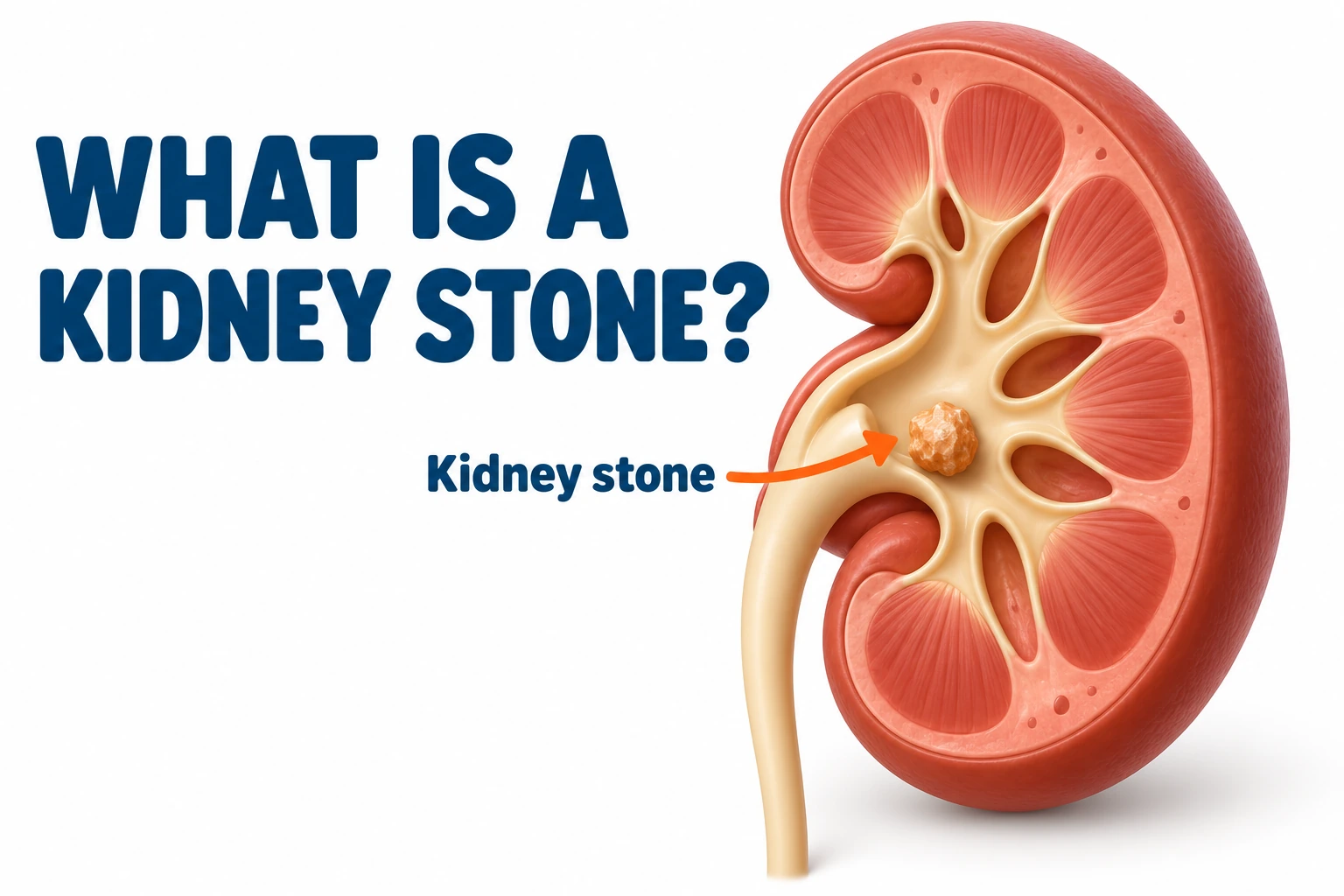
A kidney stone is a solid deposit formed from substances in urine. It can remain in the kidney without symptoms. Pain often develops when a stone moves into the ureter, the narrow tube that carries urine from the kidney to the bladder, and interferes with drainage.
A urinary tract infection can develop in different parts of the urinary system. In many cases, it affects the bladder. A kidney infection, also called pyelonephritis, is a more serious form.
The symptom pattern helps guide the assessment
| Symptom | What a stone may cause | What a bladder infection may cause |
|---|---|---|
| Pain | Sharp pain in the side or back, sometimes moving toward the lower abdomen or groin | Pressure or soreness in the lower abdomen |
| Urination | Sudden urgency or burning, especially as the stone moves lower | Frequent urges and burning, often with small amounts of urine |
| Blood in the urine | Visible or detected only through testing | Visible or detected only through testing |
| Nausea | Possible with severe pain | Less typical of a simple bladder infection |
| Fever or chills | Raise concern for an accompanying infection | Raise concern for kidney involvement or a more serious infection |
Some stones cause very little pain, while a kidney infection can cause back or side pain that resembles stone pain. Other abdominal and pelvic conditions can feel similar too.
The location of pain is useful, but it does not prove the cause
Stone pain can come in waves and change location as the stone moves. It may be difficult to find a comfortable position, and you may feel restless. Pain from a kidney infection may come with fever, chills, or a general feeling of illness.
A bladder infection can cause discomfort in the lower abdomen. But significant pain higher in the back or along one side calls for consideration of a kidney problem or another cause. When describing the pain, point to the exact spot and explain whether it moves. Saying "On the right, below my ribs, then toward my groin" is more informative than simply saying "My back hurts."
In women, stone symptoms may be mistaken for gynecological pain. In men, urinary symptoms may overlap with prostate problems. Tell your clinician if pregnancy is possible. This affects both the possible causes considered and the choice of imaging.
Why fever with a suspected stone requires urgent care
A stone with infection and blocked drainage
A trapped infection: The stone blocks urine drainage, and infected urine collects behind it. This creates the effect of a closed container under pressure.
The danger of urosepsis: Infection from the blocked kidney immediately enters the bloodstream, leading to rapid deterioration and a threat to life.
Antibiotics are not enough: Medicines cannot effectively reach the blocked kidney. Urgent surgical drainage with a stent or nephrostomy is needed to release the urine.
How a clinician distinguishes these conditions
A discussion and examination help determine which tests are needed. Urinalysis can detect blood and signs of inflammation. If an infection is suspected, a urine culture helps identify bacteria. Blood tests are sometimes needed to assess kidney function or the effects of illness on the body.
Imaging can show whether a stone is present, where it is located, and whether urine drainage is blocked. Ultrasound or a CT scan may be used depending on the situation, possible pregnancy, previous imaging, and other circumstances.
Blood in a urine sample does not prove that a stone is the cause.
The disappearance of pain does not always mean the stone has passed
An absence of pain does not prove that the stone has passed
The stone may be stuck but no longer moving: Pain develops from spasm and distension of the kidney when a stone moves or suddenly blocks drainage. If it stays in place, the pain may ease while the blockage remains.
The risk of silent kidney damage: Urine backed up behind a trapped stone gradually damages kidney tissue without causing any pain.
If you manage to collect a stone, ask how to store it and bring it in for analysis. Its composition may help with a later discussion about prevention. Preventing new stones is a separate task from assessing the current episode.
What to prepare and what to avoid while waiting
Write down when the pain began, where you feel it, your temperature if you measured it, and whether you have had vomiting or changes in your urine. Bring a medication list and describe previous stones, urine cultures, urological procedures, or kidney conditions.
Do not try to push a stone out by drinking excessive amounts of fluid, especially if you are vomiting, have a fluid restriction, or may have blocked drainage.
Sources
- NIDDK: Symptoms and Causes of Kidney Stones (opens in a new tab)
- NIDDK: Symptoms and Causes of Kidney Infection (opens in a new tab)
- European Association of Urology: Urolithiasis Guidelines (opens in a new tab)
- Urology Care Foundation: How Kidney Stones Are Diagnosed (opens in a new tab)
- MedlinePlus: Kidney Stones (opens in a new tab)
- Beaufort Memorial: Kidney Infection and UTI Differences (opens in a new tab)