
 Primary care
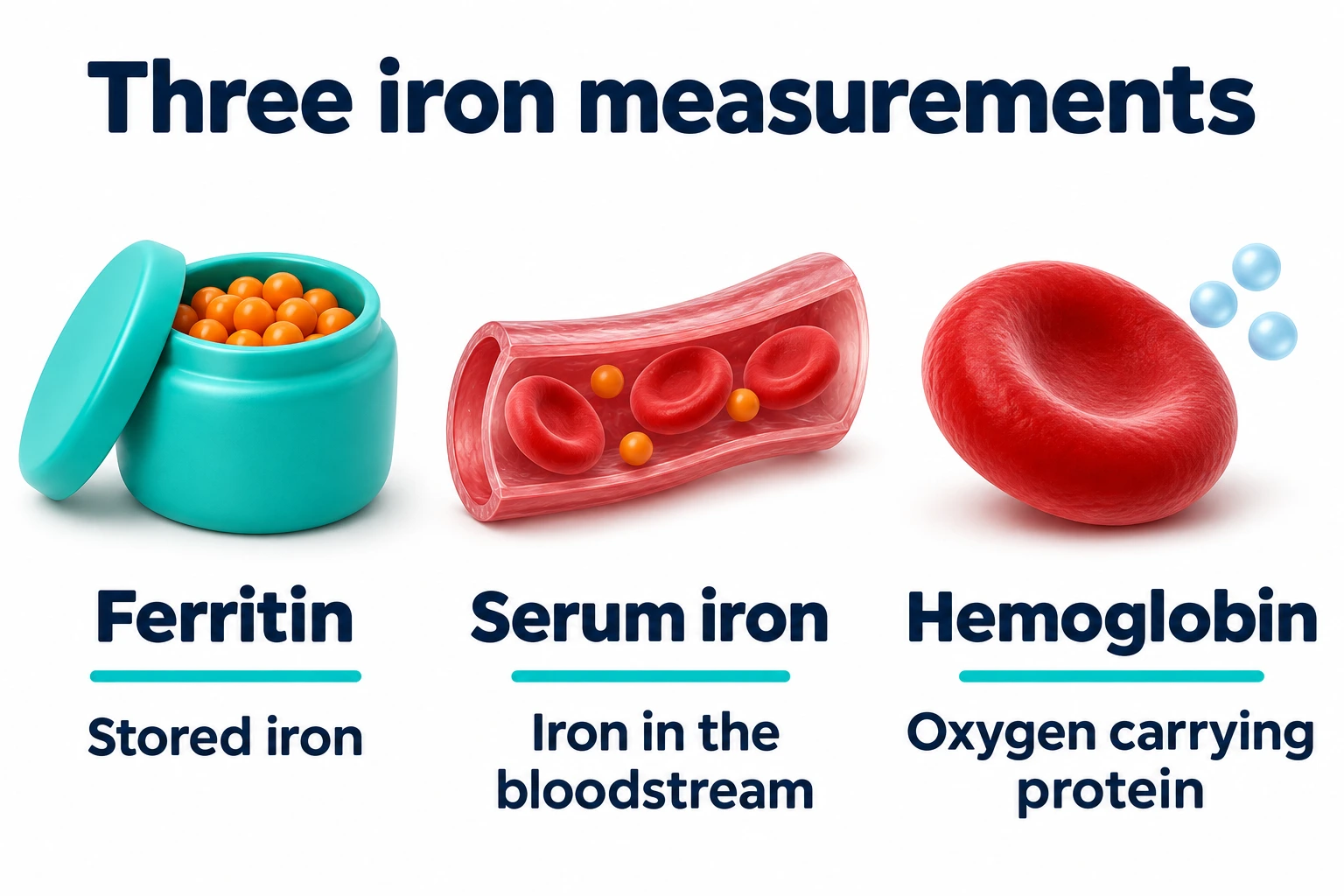
Your lab report can show low ferritin next to a hemoglobin result in range. Both numbers can be correct. Ferritin helps your clinician assess your iron reserves. Hemoglobin shows how much of the protein that carries oxygen you have in your blood.
What does ferritin measure?
Your body sets some iron aside for later use. A protein called ferritin holds much of that reserve. The lab measures ferritin in a blood sample, and your clinician uses the result as a clue to the amount of iron in storage.
Look for ferritin or serum ferritin on the report. Write down the result, its unit and the range beside it. The number on the serum iron line answers a different question, even when both tests appear on the same page.
Why two labs may print the units differently
A ferritin result of 30 ng/mL is the same concentration as 30 µg/L. The number only illustrates the unit conversion. It applies when both rows say ferritin and use those two units. If the second row says serum iron or uses a different unit, leave the values as printed. Keep each lab’s range and test date with its result.
Why iron results can point in different directions
Ferritin vs. iron in the bloodstream
Serum iron measures iron circulating in the liquid part of your blood at the time of the draw. That level can vary during the day. You can have normal iron and low ferritin on the same report. The storage measurement adds information that a single blood iron level can miss.
Ferritin vs. transferrin saturation
Transferrin carries iron through the blood. Its saturation tells you what percentage of its carrying capacity has iron attached. Think of two separate questions. How much iron is in reserve? How much of the available transport capacity is in use? Ferritin helps with the first question and saturation with the second.
Ferritin vs. hemoglobin
Can ferritin be low with normal hemoglobin? Yes. The body uses iron to make hemoglobin. Iron reserves can fall while hemoglobin remains in range. Your clinician may investigate low ferritin even when a blood count shows no anemia.
What if the ferritin blood test comes back high?
A high value can occur when the body has excess iron. Inflammation can also push ferritin up. During an illness, a value within or above the reference range can make low iron stores harder to recognize.
Tell the clinician if you were ill around the time of the test. Ask whether the remaining iron studies support the same interpretation and whether an older result would help. The ferritin value alone cannot settle why it rose.
Common questions about ferritin
Does low ferritin mean anemia?
Low ferritin supports depleted iron stores. To assess anemia, your clinician looks at hemoglobin and the rest of the blood count.
Is ferritin part of every iron panel?
Check the names of the tests on your order. A group of iron tests may include ferritin, or the clinician may order it separately.
Can one high result confirm iron overload?
A single result cannot confirm it. Your clinician can compare ferritin with transferrin saturation and consider your history before deciding what to check next.
Does ferritin explain my fatigue?
It may offer a clue. Tell your clinician when fatigue started and how it affects your day. A lab result alone cannot identify its cause.
What should I tell the person reviewing my results?
Mention iron supplements or multivitamins you take and any recent illness. Bring earlier iron results with dates if you have them.
Ask your primary care clinician what the combination of results says about your iron stores and whether you need another test.
Sources and further reading
- MedlinePlus on ferritin testing (opens in a new tab)
- NIH Office of Dietary Supplements on iron status (opens in a new tab)
- MedlinePlus on iron studies (opens in a new tab)
- Labcorp laboratory conversion table for serum ferritin (opens in a new tab)
- MedlinePlus on comparing results from different laboratories (opens in a new tab)