
 Primary care
“Anxiety attack” can mean different things to different people. One person means worry that built through the afternoon. Another means a rush of fear in the grocery store that reached its worst within minutes. If you describe what happened in sequence, a clinician has more to work with than a label.
When physical symptoms need emergency help
New chest pressure, serious trouble breathing or a loss of consciousness needs emergency assessment. Call 911 for possible heart attack symptoms, including chest discomfort that lasts more than a few minutes or leaves and returns. A previous panic attack cannot tell you what is causing a new episode.
What clinicians mean by a panic attack
A panic attack brings an abrupt surge of fear or intense discomfort. A pounding heart, shaking, tingling, nausea or a feeling that you are losing control can occur. The intensity can peak within minutes. Some people feel exhausted or worried after the strongest sensations have eased.
Are anxiety attacks and panic attacks the same?
People also use the word anxiety for worry that grows as a situation approaches or continues after it ends. The phrase “anxiety attack” does not specify a particular sequence or duration. A clinician may ask what the word means to you. Anxiety and panic can occur in the same person.
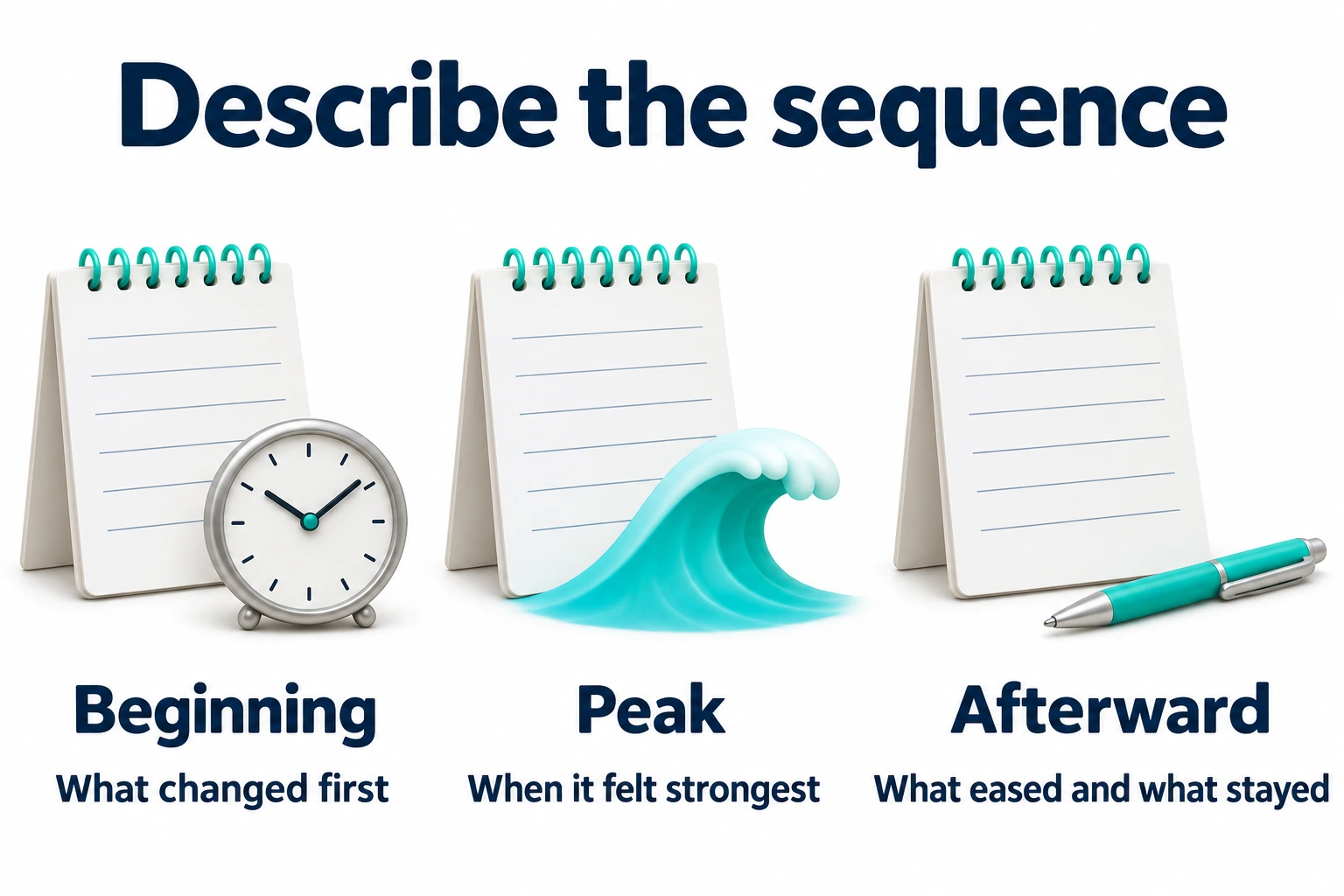
Describe the beginning, the peak and what followed
Think back to the first change you remember. Did a thought come first, did a physical sensation catch your attention or did both arrive together? Describe where you were and what you were doing. Say how long it took to reach the worst point and what went away first. An estimate is enough.
When it felt like one long episode
If the fear rose, eased and rose again, give each rise its own line. For example, “My hands shook before lunch. The shaking settled while I sat with a friend. Another rush came as I headed home.” Say whether you felt like yourself between those moments. If you never felt a break, say that instead. Estimate times afterward if it helps. You do not need to watch the clock or decide how many attacks that makes.
The days between episodes matter
Mention if you have stopped driving a certain route, avoided a store or missed work because you fear another episode. Repeated unexpected attacks and continuing worry or changes in behavior may lead a clinician to assess for panic disorder. One attack alone does not establish that diagnosis.
Questions about panic and anxiety episodes
Can a panic attack come out of nowhere?
Yes. Some attacks come without an obvious trigger. Others happen in a particular situation. Tell the clinician if you remember a trigger or if none comes to mind.
How long does an anxiety attack last?
People use the phrase for different experiences, so there is no single duration. Separate the time of greatest fear from any worry that lingered afterward.
Can panic attacks happen without a trigger while I sleep?
A panic attack can wake a person from sleep. Report new symptoms, especially trouble breathing or chest discomfort, so a clinician can consider other causes.
What if I cannot remember the order?
Say which details you recall with confidence. A person who was with you may remember how long it lasted or whether you lost consciousness.
Can I ask for help if it happened only once?
Yes. Discuss a first or unfamiliar episode with a health professional. If you have current emergency symptoms, seek emergency help now.
When you discuss an episode, bring your short account and mention anything you now avoid because of it.