
 Women's health
The hardest day of the month may be easy to remember. The first day you feel like yourself again can be just as useful. When a clinician considers PMS or PMDD, both dates matter. So does what happened at work, at school or at home in between.
Look for a pattern on both sides of your period
Premenstrual syndrome, or PMS, can involve physical symptoms such as bloating or breast tenderness and emotional changes such as irritability. These symptoms tend to appear before a period and ease once bleeding starts. Pay attention to the days afterward as well. A stretch with few symptoms helps show where one episode ends.
When symptoms last through the month
Some people feel anxious or low throughout the month and feel worse before their period. Tell your clinician about that baseline. Symptoms that persist between periods can call for a different explanation, even when the change before bleeding feels unmistakable.
Severe PMS vs. PMDD and the effect on daily life
Premenstrual dysphoric disorder, or PMDD, causes marked distress or trouble functioning. Mood symptoms such as severe irritability, sadness or anxiety are central. Having cramps, having one difficult day or disagreeing with someone cannot establish the diagnosis.
Describe an effect another person could recognize
Write down a specific change. Perhaps on certain days you miss a shift, step out of class or avoid a conversation you would usually handle. Note whether the same difficulties lift after your period begins. You need not prove that the effect is serious enough before asking for help.
A daily record captures what memory misses
Use a calendar or note on your phone. Pick a few symptoms that matter to you and record their intensity each day. Mark the first day of bleeding. Add a few words about sleep, work or relationships. Keep the entries short enough to make one on a good day too.
A diary entry that takes less than a minute
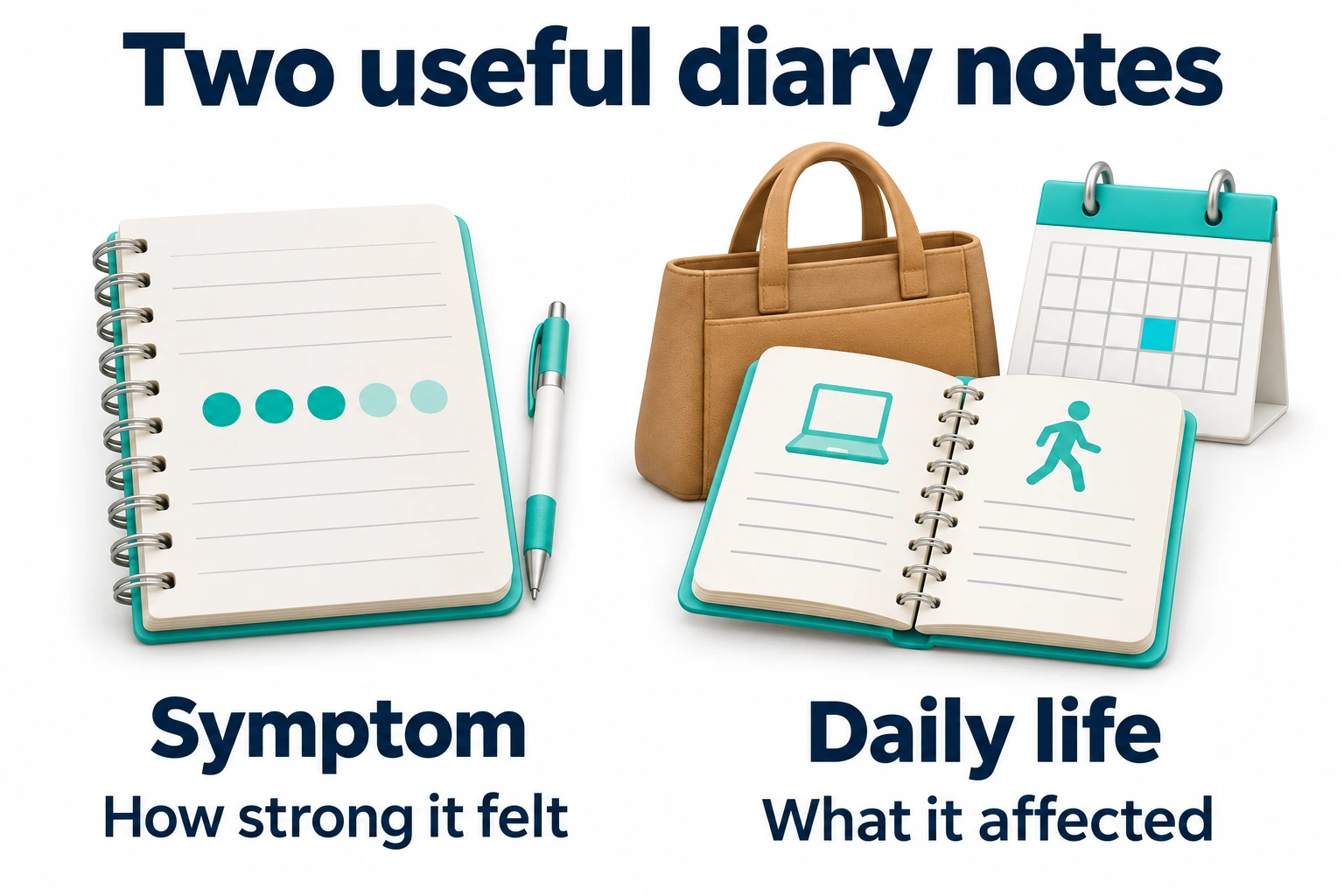
Set a reminder for something you already do each evening, such as plugging in your phone. Give the same symptom and its effect separate spaces. One entry might read “Irritability mild. Finished my shift as planned.” Another might read “Irritability strong. Left a meeting early.” Using the same two prompts on a good day makes it easier to see when the difficulty lifted. If your clinician gives you a rating form, follow its scale.
How long should the record run?
Clinicians often ask for daily notes across at least two cycles. Start with today. You can seek help while you keep the record. If you feel unsafe or might hurt yourself, get emergency help now.
Questions about PMS and PMDD
When do PMDD symptoms start?
They often appear in the week or two before bleeding and improve within a few days of its start. Your own dates are more informative than an estimate from a calendar app.
Is PMDD the same as severe cramps?
No. Pain deserves attention in its own right. For PMDD, a clinician asks about a recurring cluster of symptoms that includes mood changes and affects daily life.
How is PMDD diagnosed?
A clinician reviews which symptoms recur, when they lift and how they affect daily life. Daily records across two cycles can help show the pattern. A blood test alone cannot establish the diagnosis.
What if I forget to make a few entries?
Leave those dates blank and keep going. Distinguish a day you felt well from a day you cannot remember.
What if my cycle length changes?
Mark actual bleeding dates and the days symptoms appear and lift. Bring what you have, even if the gaps between periods vary.
At a visit, show the days you felt well alongside the days you struggled.